Electronic Slab Leak Location in Harbor City 90710, CA
Electronic Slab Leak Location in Harbor City 90710, CA — pinpoint electronic location of a suspected under-slab leak — acoustic sensors, line tracing, and infrared imaging that mark the break within inches.
In Short
Electronic Slab Leak Location in Harbor City 90710, CA — pinpoint electronic location of a suspected under-slab leak — acoustic sensors, line tracing, and infrared imaging that mark the break within inches. Serving the 90710 ZIP: electronic line tracing, acoustic pinpointing, thermal cross-check. First step when you call (833) 713-2101: reviewing what's already confirmed, then scheduling.
What the Pinpointing Visit Looks Like in Harbor City (90710)
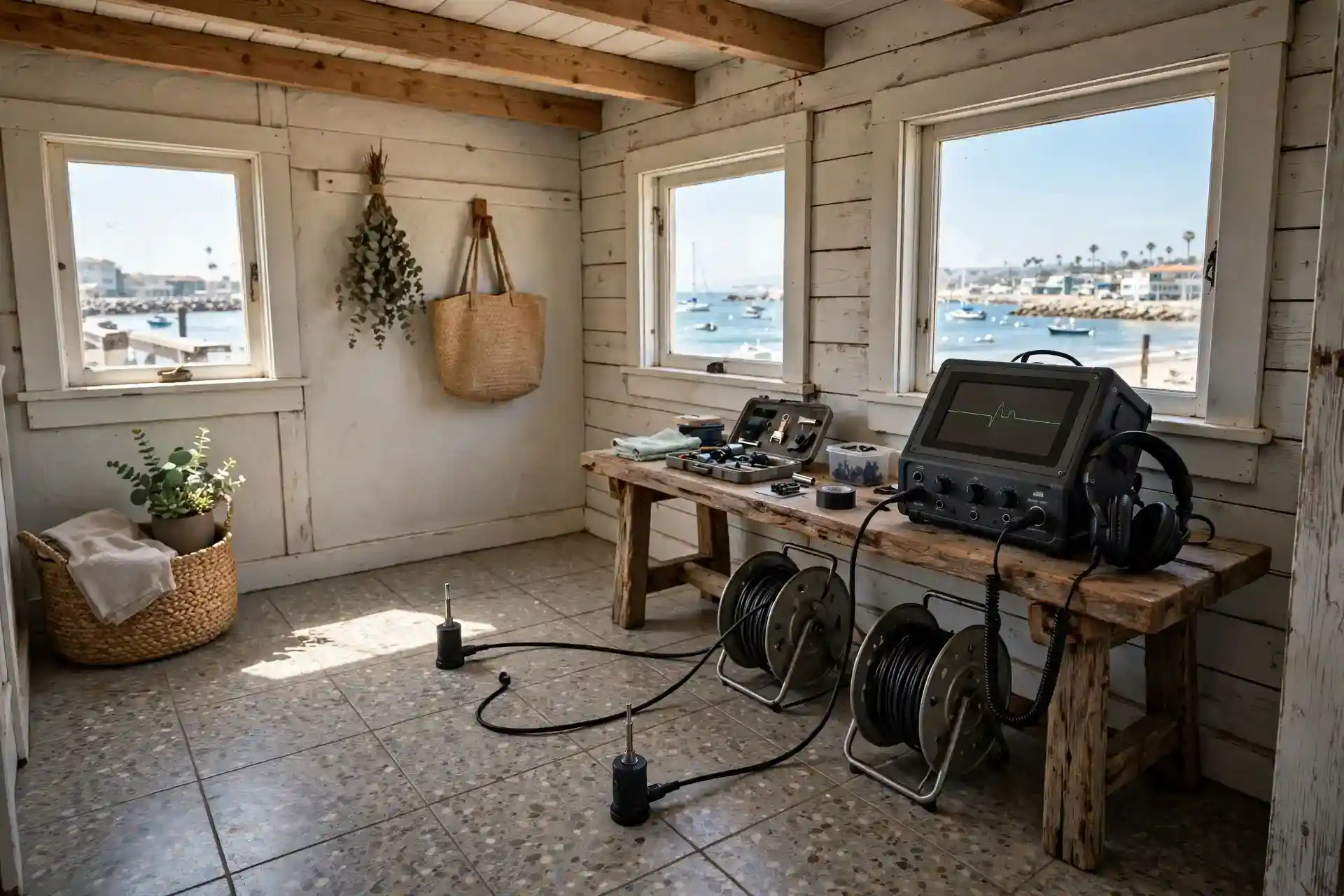
A location visit in Harbor City is quiet, technical work — headphones, sensors, and a marked floor at the end. Here's how it runs, and what 90710's ground conditions change about each step.
Getting Ready for the Pinpointing Visit in 90710
Clear the rooms above the suspected pipe run before we arrive — furniture a few feet off the walls, rugs rolled where the listening happens. We need access to the water heater and the main shutoff too. multifamily visits need building access and, ideally, the manager on site — line up access before we arrive
Expect a quiet house to work best: the acoustic sensors hear everything, including footsteps and appliances. We'll ask for the HVAC and laundry to stay off during the listening pass. It feels fussy; it's the difference between a mark you can trust and a guess. Still unsure whether it's a slab leak? That's exactly what the call is for: (833) 713-2101.
Local Notes for Harbor City 90710
The 90710 ZIP is Harbor City — Pacific Coast Highway, Vermont Avenue, Normandie Avenue, and 257th Street frame a compact, flat community of 1970s single-family homes and multifamily buildings. Ken Malloy Harbor Regional Park is the green anchor. Slab-on-grade is the norm, with 1970s copper supply lines and ABS drains. The high water table near the harbor keeps the alluvial soil saturated, which ages copper faster than the calendar suggests and smears acoustic signals the way it does in Wilmington next door.
Two Harbor City rules. First, don't let '1970s' lull you — 50-plus-year-old copper in saturated soil is in the pinhole window, and the water table here doesn't care that the pipe is younger than Torrance's. Second, multifamily residents: know your shutoff situation before an emergency, and get the building manager looped in early — shared lines mean shared decisions. Single-family owners: the meter test is your friend, same as everywhere. Call (833) 713-2101 and mention whether it's a house or a multifamily building — the visit plans differently.
How this works: you call our line, we match you with a slab-leak specialist who serves 90710 — no fee for the call itself. Questions about electronic slab leak location in the 90710 ZIP? Call (833) 713-2101.
Sorting Shared Lines: Slab-Leak Detection in Harbor City Multifamily
On a Harbor City call, the critical question isn't where the leak is — it's whose line is leaking. In 1970s-era apartment buildings and condo complexes, one slab leak can affect multiple units: water migrating under a shared slab surfaces as a stain next door. Detection begins with mapping, not listening. Each unit's fixtures are isolated and pressure-tested to identify the losing line; only then do sensors come out. Authorizing concrete work before the leak is assigned to the right unit is the expensive mistake this prevents.
The 1970s copper here is younger than nearby 1950s stock but old enough for pinhole failures — and the high water table keeps surrounding soil saturated, smearing acoustic signals wider. Small pinhole hisses drown in the groundwater-conducted background, so correlator sensors do the heavy lifting: two pickup points, one time-delay calculation, a position independent of how loud the leak sounds. Thermal imaging helps on hot-line calls, where a warm patch narrows the search before sensors are placed.
For owners and HOAs, the detection report is a management document as much as a repair map. It identifies the leaking line, traces its path through the shared slab, and notes the condition pattern — because 1970s copper failing in one unit often means neighboring units share the timeline. That turns a single emergency into planned maintenance: which units to watch and whether a building-wide re-pipe belongs in the capital plan. In multifamily detection, finding today's leak is table stakes; mapping tomorrow's risk is the real deliverable.
Suspect a Slab Leak? Talk to a Specialist Today
One call connects you with a local slab leak professional serving Rancho Palos Verdes, CA — day or night.
Call (833) 713-2101Frequently Asked Questions
My Harbor City home was built in the 1970s. Isn't the plumbing too young to fail?
Young is relative. 1970s copper is 50-plus years old, and where Harbor City's high water table keeps soil saturated, pinhole failures arrive right on schedule — saturated soil is harder on copper than dry soil, whatever the decade. Electronic Slab Leak Location doesn't grade on a curve: the meter test treats 1970s pipe exactly like 1950s pipe. If the symptoms are there, the age on the permit doesn't overrule them.
Who authorizes the work in a condo or apartment building?
It depends on the building's documents — unit owners, HOAs, and property managers split responsibility differently everywhere. What we can do: diagnose precisely, document clearly, and give you a written account of findings that you can take to whoever decides. Electronic Slab Leak Location gives you the facts; the authorization chain is yours to run. Get the manager or HOA contact involved early — it prevents the visit from stalling at the decision step.
Does the high water table make Harbor City leaks worse?
It makes them earlier and harder to hear. Saturated alluvial soil accelerates outside-in copper corrosion — so 1970s pipe here ages faster than 1970s pipe on dry ground — and it smears acoustic signals, which complicates the listening. The meter test and pressure isolation cut through both problems. If you're in 90710, treat your plumbing as older than its birth certificate says.
What's the emergency protocol when multiple units are affected?
Contain first, sort out second. The emergency visit stops the water and maps the affected area across units — then the findings go to the building's decision-maker with a clear written account. Electronic Slab Leak Location in a multi-unit emergency includes documenting which units show damage versus where the break actually is, because those are often different places. Call (833) 713-2101 immediately; coordination delays are the real enemy in multi-unit emergencies.
What's the difference between leak detection and electronic location?
Detection answers "is there a leak, and on which line" — meter tests, pressure isolation, a general area. Electronic location answers "exactly where" — traced pipe path, acoustic pinpoint, thermal confirmation, a mark on the floor. In Harbor City, most jobs need both in sequence: detection first to prove the leak, location second to aim the repair. If you've already got a confirmed leak, you can start at location.
How accurate is electronic pinpointing?
Done properly — traced path, acoustic triangulation, thermal cross-check — it typically lands within inches of the actual break, not feet. It's not magic and it's not infallible: in multifamily buildings the mark has to account for shared versus dedicated lines — pinpointing the break is only half the job; mapping whose line it is, is the other half What it reliably replaces is exploratory jackhammering, where the "search" used to be a trench. We'll tell you on site how clean the signal is before any mark goes down.
Does electronic location work under tile and wood floors?
Yes — the sensors read through standard floor coverings, and thermal imaging actually reads surface temperature, so tile and stone show the anomaly well. Thick engineered wood and some underlayments muffle the thermal signal, which is why we never rely on one method alone. Whatever's on your Harbor City floors, the acoustic pass still hears through it.