Electronic Slab Leak Location in Gardena 90247, CA
Electronic Slab Leak Location in Gardena 90247, CA — pinpoint electronic location of a suspected under-slab leak — acoustic sensors, line tracing, and infrared imaging that mark the break within inches.
In Short
Electronic Slab Leak Location in Gardena 90247, CA — pinpoint electronic location of a suspected under-slab leak — acoustic sensors, line tracing, and infrared imaging that mark the break within inches. Serving the 90247 ZIP: electronic line tracing, acoustic pinpointing, thermal cross-check. First step when you call (833) 713-2101: reviewing what's already confirmed, then scheduling.
What the Pinpointing Visit Looks Like in Gardena (90247)
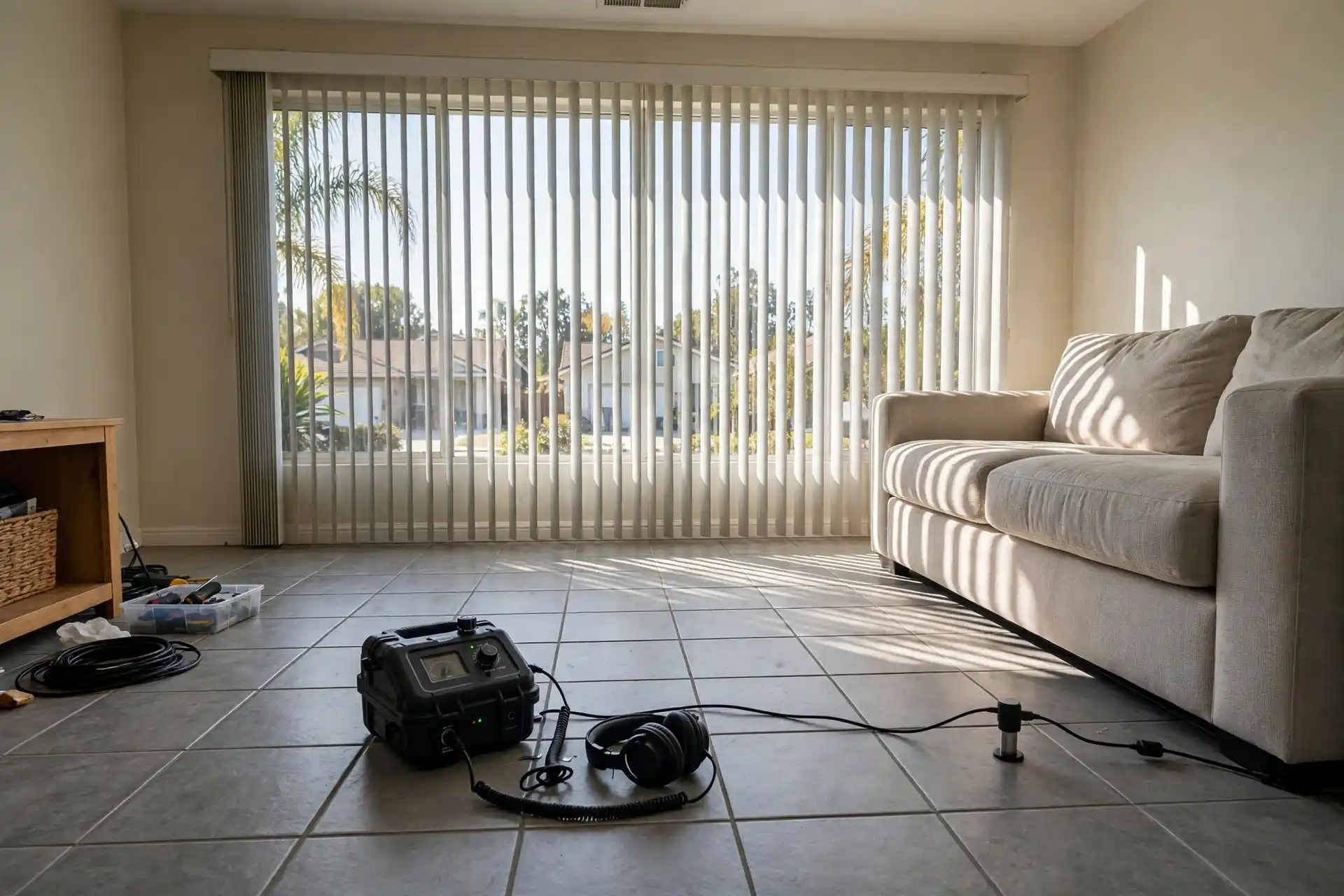
A location visit in Gardena is quiet, technical work — headphones, sensors, and a marked floor at the end. Here's how it runs, and what 90247's ground conditions change about each step.
Getting Ready for the Pinpointing Visit in 90247
Clear the rooms above the suspected pipe run before we arrive — furniture a few feet off the walls, rugs rolled where the listening happens. We need access to the water heater and the main shutoff too. property managers: have the owner's authorization path ready — the visit stalls when nobody can approve the next step
Expect a quiet house to work best: the acoustic sensors hear everything, including footsteps and appliances. We'll ask for the HVAC and laundry to stay off during the listening pass. It feels fussy; it's the difference between a mark you can trust and a guess. Still unsure whether it's a slab leak? That's exactly what the call is for: (833) 713-2101.
Local Notes for Gardena 90247
Central Gardena fills the 90247 ZIP: Vermont Avenue, Western Avenue, Redondo Beach Boulevard, and Artesia Boulevard frame the grid, with the I-110, SR-91, and I-405 corridors at the edges. The Gardena Bowl, the Gardena Valley Japanese Cultural Institute, and the post offices on Redondo Beach Boulevard and Gardena Boulevard are local anchors. Housing is 1940s–1960s postwar single-family and multifamily on flat alluvial soil at about 49 feet of elevation — slab foundations throughout, the galvanized-to-copper pipe mix, cast-iron drains.
Gardena property owners and managers: the economics here punish delay more than anywhere else in the service area, because late discovery converts pipe repairs into restoration projects. Put together a property file for each rental — shutoff location, build era, our number (833) 713-2101 — and tell tenants the three symptoms (warm floor, running-water sound, bill spike) in plain language. Tenants: reporting early protects your deposit and your living conditions alike. A two-minute meter check quarterly is the cheapest building maintenance there is.
How this works: you call our line, we match you with a slab-leak specialist who serves 90247 — no fee for the call itself. Questions about electronic slab leak location in the 90247 ZIP? Call (833) 713-2101.
Finding Long-Running Leaks in Gardena's Rental-Dense Blocks
Gardena's slab-leak calls skew different from owner-occupied cities for one reason: absentee ownership means leaks run longer before reporting. By the time a 90247 visit happens, the leak has often been active for months. More escaping water makes more noise, so the acoustic signal is usually strong; the challenge shifts from finding the leak to mapping what it did. Moisture meters profile the full extent of slab saturation, and the survey documents secondary damage — swollen baseboards, flooring loss, early mold conditions — alongside the leak point.
The stock — 1940s-1960s postwar single-family and multifamily on flat coastal plain — is classic high-volume slab-leak territory: galvanized earliest, copper later, all at or past the age where failures arrive in sequence. Dense small lots put neighboring homes close, and their plumbing noise, irrigation, and activity raise the ambient floor; correlator sensors comparing two slab points filter that neighborhood hum better than single-point listening. Pressure isolation remains every visit's foundation — proving which line loses pressure prevents chasing the wrong system.
The Gardena detection report serves two audiences: the owner needing the repair scoped, and often a tenant needing disruption minimized. Precise locating keeps the repair opening small — important in an occupied rental — while damage mapping scopes the restoration: drying, flooring, whether mold remediation belongs in the plan. For owners managing multiple small properties, the line-path trace is portfolio intelligence; the same 1950s copper failing in one Gardena rental is likely on the same timeline in the others. One thorough visit can inform maintenance decisions across several addresses.
Suspect a Slab Leak? Talk to a Specialist Today
One call connects you with a local slab leak professional serving Rancho Palos Verdes, CA — day or night.
Call (833) 713-2101Frequently Asked Questions
Why is mold such a frequent part of Gardena slab-leak calls?
Time. Absentee ownership means leaks run for weeks or months before discovery, and persistent under-slab moisture plus Southern California warmth is the mold recipe. By the time a 90247 leak gets reported, the moisture has often been feeding growth behind baseboards and under flooring for a while. Electronic Slab Leak Location finds the pipe failure; the mold scope is a separate remediation question we'll flag honestly. Early reporting is the only prevention — there's no product that substitutes for it.
I'm a property manager. What should be in my slab-leak file?
Per property: the main shutoff location (verified, not guessed), the build era and pipe material if known, tenant contact info, and our number (833) 713-2101. Plus a one-page symptom sheet for tenants: warm floor spots, running-water sounds with taps off, unexplained bill spikes — report all three immediately. The properties with files get faster visits, faster authorization, and smaller restoration scopes. The ones without get delays, and delays are what make Gardena jobs expensive.
Are Gardena's pipes worse than neighboring cities'?
Not worse — just older on average and observed less. The 1940s–60s postwar stock is the same era as much of the South Bay; what differs is the ownership pattern, not the metallurgy. A 1955 copper line in Gardena fails like a 1955 copper line in Torrance. The difference is that Torrance's owner-occupant calls at the warm floor, while Gardena's absentee-owner property calls at the mold. Same pipe, different timeline.
What can tenants do if the landlord is slow to act?
Document everything: dates, photos of the symptoms, your written reports to the landlord or manager, and meter readings if you can get them. Keep reporting in writing. Electronic Slab Leak Location can diagnose the problem — call (833) 713-2101 — but authorization for the repair follows the property's chain. Written documentation protects you and creates the record that gets slow situations moving. Don't stop reporting because the first report went nowhere.
What's the difference between leak detection and electronic location?
Detection answers "is there a leak, and on which line" — meter tests, pressure isolation, a general area. Electronic location answers "exactly where" — traced pipe path, acoustic pinpoint, thermal confirmation, a mark on the floor. In Gardena, most jobs need both in sequence: detection first to prove the leak, location second to aim the repair. If you've already got a confirmed leak, you can start at location.
Does electronic location work under tile and wood floors?
Yes — the sensors read through standard floor coverings, and thermal imaging actually reads surface temperature, so tile and stone show the anomaly well. Thick engineered wood and some underlayments muffle the thermal signal, which is why we never rely on one method alone. Whatever's on your Gardena floors, the acoustic pass still hears through it.
After you mark the spot, do I still have to open the slab?
Almost always, yes — but the opening is targeted: a small, deliberate cut at the mark rather than a exploratory trench. The alternative the mark enables is skipping the slab entirely: rerouting the line overhead through walls or attic. 1940s–60s postwar single-family and multifamily homes, many of them small rentals, and the location report lays out which path makes sense for your lot and floor plan.