Electronic Slab Leak Location in El Segundo 90245, CA
Electronic Slab Leak Location in El Segundo 90245, CA — pinpoint electronic location of a suspected under-slab leak — acoustic sensors, line tracing, and infrared imaging that mark the break within inches.
In Short
Electronic Slab Leak Location in El Segundo 90245, CA — pinpoint electronic location of a suspected under-slab leak — acoustic sensors, line tracing, and infrared imaging that mark the break within inches. Serving the 90245 ZIP: electronic line tracing, acoustic pinpointing, thermal cross-check. First step when you call (833) 713-2101: reviewing what's already confirmed, then scheduling.
What the Pinpointing Visit Looks Like in El Segundo (90245)
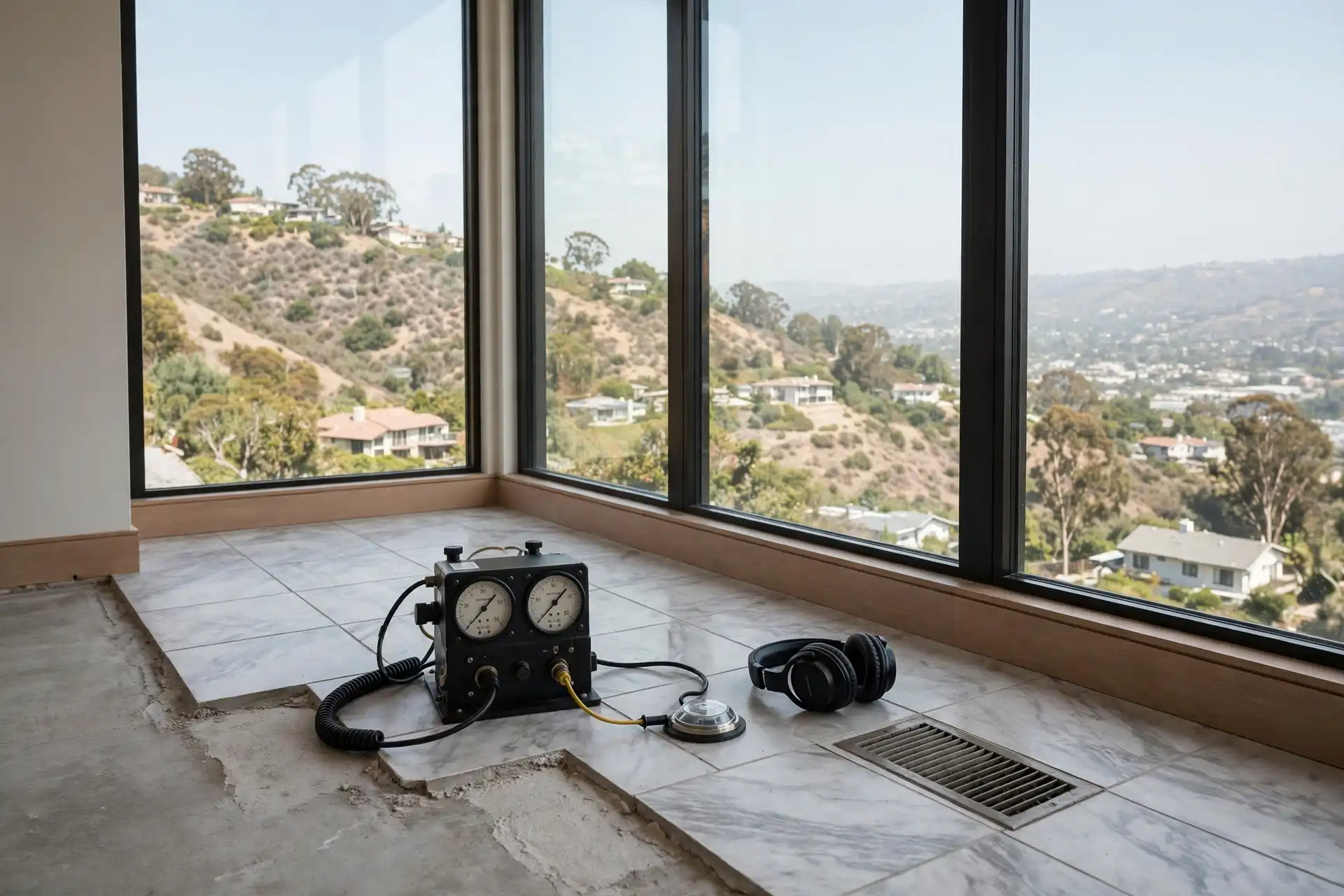
A location visit in El Segundo is quiet, technical work — headphones, sensors, and a marked floor at the end. Here's how it runs, and what 90245's ground conditions change about each step.
Getting Ready for the Pinpointing Visit in 90245
Clear the rooms above the suspected pipe run before we arrive — furniture a few feet off the walls, rugs rolled where the listening happens. We need access to the water heater and the main shutoff too. if you're east of Sepulveda in the older blocks, say so — that's the highest-risk stock in the ZIP and it calibrates our urgency
Expect a quiet house to work best: the acoustic sensors hear everything, including footsteps and appliances. We'll ask for the HVAC and laundry to stay off during the listening pass. It feels fussy; it's the difference between a mark you can trust and a guess. Questions before you book? Call (833) 713-2101 — we'd rather answer them now than discover them mid-visit.
Local Notes for El Segundo 90245
The 90245 ZIP covers El Segundo from the beach to the inland edge: Sepulveda Boulevard as the spine, El Segundo Boulevard, Rosecrans Avenue, and Imperial Highway framing the 1950s residential blocks. LAX sits at the northern edge; the Northrop Grumman and Raytheon campuses and the Chevron refinery mark the employment landscape; El Segundo Beach and The Point anchor the west side. Housing is 1950s single-family — the aerospace-company-town stock — on coastal dune sand, slab-on-grade, copper supply with cast-iron drains, plus newer multifamily near the beach.
El Segundo's east-of-Sepulveda blocks deserve inland-Torrance-plus urgency: same 1950s copper, harder soil and air, earlier failures. If your home is a 1950s original in those blocks, treat the symptoms the way Torrance treats 1960s homes — the salt air has been advancing your pipe's calendar for decades. And in dune sand, never trust a damp spot's location: water travels, and the break is found with sensors, not eyes. Call (833) 713-2101 at the first warm floor or meter movement — the timeline here doesn't reward waiting.
We're a referral line: you talk to us, and we connect you with a slab-leak specialist serving the 90245 area. Questions about electronic slab leak location in the 90245 ZIP? Call (833) 713-2101.
Listening for Salt-Air Pinholes in El Segundo's Sandy Soil
El Segundo pairs two detection challenges: salt air accelerating copper corrosion, and sandy soil swallowing the leaks' sound. The 1950s copper in older blocks east of Sepulveda — near the refinery, the city's highest-risk stock — pits and pinholes a decade or more ahead of the inland schedule. Those pinholes are small and high-frequency by nature, and coastal dune sand attenuates high frequencies fastest: grains absorb vibration instead of transmitting it. Standard acoustic listening underperforms here — the signal doesn't survive the trip through loose sand.
The protocol adapts by leaning on methods independent of soil acoustics. Pressure isolation comes first and carries unusual weight: closing branches one at a time quarters the search before any sensor is placed. Tracer gas follows — hydrogen-nitrogen pushed into the isolated line escapes at the break and rises through sand to a sniffer. Thermal imaging contributes on hot-line calls, reading slab warmth instead of slab sound. Acoustic sensors still help where sand is compacted, but in 90245 they're the confirmation tool, not the lead.
The LAX-adjacent setting adds a practical note: jet and traffic noise raises the ambient floor, so listening goes better in quieter hours. For owners in the older blocks, the visit delivers an unwelcome but valuable forecast — salt-air corrosion is a system-wide condition, not a single-point failure, and the survey's line-path map shows where the rest of the 1950s copper runs. Finding today's pinhole precisely keeps the immediate repair small; understanding the corrosion pattern behind it lets the homeowner plan five years ahead instead of reacting.
Suspect a Slab Leak? Talk to a Specialist Today
One call connects you with a local slab leak professional serving Rancho Palos Verdes, CA — day or night.
Call (833) 713-2101Frequently Asked Questions
Which part of El Segundo is highest-risk?
The older residential blocks east of Sepulveda, near the refinery — that's the 1950s company-town stock in the saltiest, sandiest conditions. The beachside multifamily is newer construction with modern materials and much lower risk. When you call (833) 713-2101, mention which side of Sepulveda you're on — it's the fastest risk calibration in the ZIP.
Does the sand make leaks harder to find?
It makes them harder to eyeball and fine for electronics. Dune sand lets water travel far from the break, so visual location fails — the damp spot misleads. But sand transmits acoustic signals well, and thermal imaging reads the temperature anomaly cleanly. Electronic Slab Leak Location in 90245 leans on sensors over sight as a matter of policy: we find the break, not the puddle's last known address.
Is the refinery a factor in pipe corrosion?
Not directly — the corrosion driver is salt air and sandy soil, not the refinery's presence. The refinery matters as a landmark for locating the oldest, highest-risk residential blocks east of Sepulveda, not as a chemical factor in your pipes. Electronic Slab Leak Location cares about your soil, your air, and your pipe's age — the industrial backdrop is geography, not chemistry.
Should El Segundo homeowners do anything differently?
Two things: advance your mental calendar — your 1950s copper is on the salt-air schedule, not the inland schedule — and never trust a damp spot's location in sand. Quarterly meter checks with fixtures off, immediate calls to (833) 713-2101 for warm floors or running-water sounds, and electronic methods when it's time to locate. The playbook is the standard one; the urgency is El Segundo's.
How accurate is electronic pinpointing?
Done properly — traced path, acoustic triangulation, thermal cross-check — it typically lands within inches of the actual break, not feet. It's not magic and it's not infallible: sandy soil lets leak water travel, so the wet spot misleads — electronic tracing and acoustic work find the break itself, not where the water surfaced What it reliably replaces is exploratory jackhammering, where the "search" used to be a trench. We'll tell you on site how clean the signal is before any mark goes down.
Does electronic location work under tile and wood floors?
Yes — the sensors read through standard floor coverings, and thermal imaging actually reads surface temperature, so tile and stone show the anomaly well. Thick engineered wood and some underlayments muffle the thermal signal, which is why we never rely on one method alone. Whatever's on your El Segundo floors, the acoustic pass still hears through it.
After you mark the spot, do I still have to open the slab?
Almost always, yes — but the opening is targeted: a small, deliberate cut at the mark rather than a exploratory trench. The alternative the mark enables is skipping the slab entirely: rerouting the line overhead through walls or attic. 1950s aerospace-company-town homes — with the oldest residential blocks east of Sepulveda near the refinery, and the location report lays out which path makes sense for your lot and floor plan.