Copper Pipe Slab Leak Repair in Rolling Hills, CA 90274
Copper pipe slab leak repair in Rolling Hills (90274): corroded, pitted, or stressed copper supply lines under your slab, located with electronic detection and repaired by spot repair, reroute, or lining.
In Short
Copper pipe slab leak repair in Rolling Hills (90274): corroded, pitted, or stressed copper supply lines under your slab, located with electronic detection and repaired by spot repair, reroute, or lining. Describe your symptoms when you call (833) 713-2101 and a local specialist serving 90274 will evaluate the leak on site.
The Hidden Copper Problem Beneath Rolling Hills Slabs
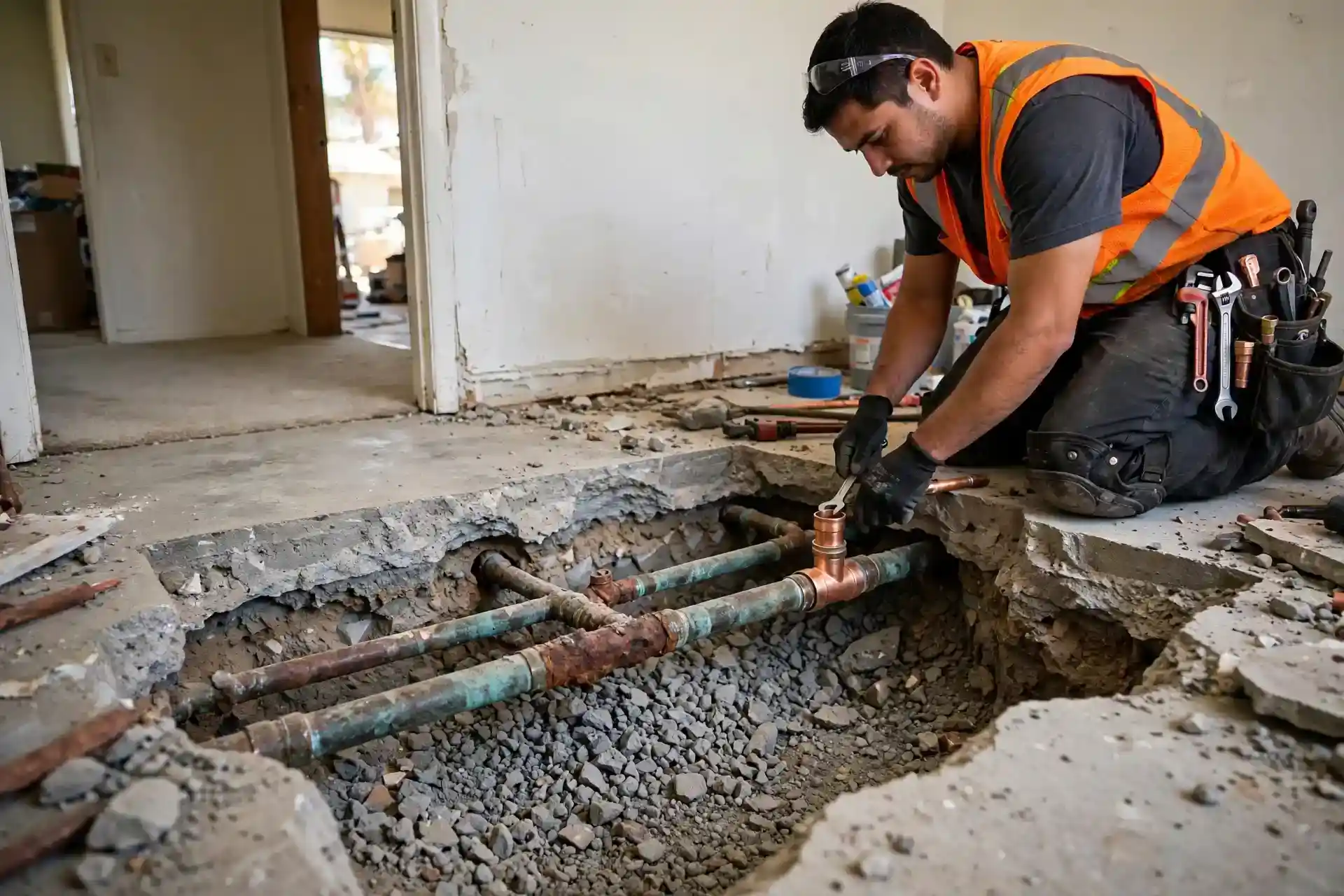
Under most Rolling Hills homes built in the ranch-style homes on one-acre-plus equestrian lots, mostly 1950s-1970s, water reaches your fixtures through copper supply lines buried in or beneath the concrete slab. Copper earned that job honestly - it handles pressure well and resists scale - but after decades in hilltop shale and graded fill, the same pipe that looked immortal starts to pit. Tiny pinholes open from the outside in, and because the leak sits under concrete, the first sign is rarely water you can see.
That is the pattern behind most 90274 slab-leak calls: a home on a slab foundation with 50-to-70-year-old copper lines, and symptoms that look like anything except a pipe - a warm patch on the tile, the water meter turning when nothing is running, a bill that climbs for no reason. Electronic detection exists precisely for this moment: it finds the leak to within inches so the concrete work stays small and the repair stays targeted.
Ground Truth in 90274: Local Geology Meets Your Copper Lines
Rolling Hills (90274) sits on hilltop Monterey shale with large graded pads, equestrian fill areas, and long driveways that concentrate runoff. Homes here are ranch-style homes on one-acre-plus equestrian lots, mostly 1950s-1970s, and under the slab you will typically find 1950s-70s copper supply lines under the slab with cast-iron or ABS drains. The local climate brings a slightly cooler hilltop microclimate with the same November-to-March rain pattern. Around the Rolling Hills equestrian trail system, and along corridors like the private gated roads off Palos Verdes Drive North, that combination of pipe age, soil, and moisture sets the terms for every copper repair - which is why a 90274 diagnosis starts with local ground, not just the pipe.
On one-acre equestrian lots, the copper run from the meter to the far bathroom can stretch far longer than in a typical tract home, and every extra foot is another foot of 50-to-70-year-old pipe. When a leak is located far from the entry point, chasing it with multiple spot repairs through the slab gets expensive fast - a single overhead reroute usually wins on both cost and disruption. Outbuildings and barns on the same service line also need isolating before the house slab gets blamed.
The practical upshot for Rolling Hills: copper repair here is never just about the pipe. Acre-plus lots mean very long under-slab pipe runs - a leak can sit dozens of feet from the meter, so rerouting often beats chasing it through the slab - so the evaluation reads the ground conditions alongside the pressure readings, and the repair choice (spot repair, reroute, or lining) is the one that holds up under both.
Finding It, Reaching It, Fixing It: The Copper Repair Path
Copper under the slab in Rolling Hills usually fails one of three ways: pinhole pitting from water chemistry and soil conditions, joint failure where the pipe was stressed during installation or by ground movement, and - on hot lines - accelerated corrosion from constant heat. The repair always starts the same way: electronic detection that pinpoints the leak, because cutting concrete on a guess is how small jobs become big ones.
Once located, a copper slab leak in 90274 typically gets one of three repairs. A spot repair opens a small section of slab at the leak, replaces the failed segment, and closes the concrete - the right call for a single isolated failure in otherwise sound pipe. A reroute abandons the under-slab line and runs a new one overhead through walls or the attic, which makes sense when the copper is systemically pitted or the ground conditions argue against burying new pipe in the same soil. Epoxy lining coats the inside of the existing line, an option for accessible runs where demolition must stay minimal.
Which one fits your Rolling Hills home depends on what detection finds: one pinhole or many, the pipe's overall condition, and what the ground is doing underneath you. That is a decision made with the specialist on site, looking at real readings - not over the phone. When you call (833) 713-2101, the first step is describing your symptoms; the evaluation and the options come after, in person.
How Copper Leaks Announce Themselves Under Concrete
Copper slab leaks rarely announce themselves with visible water. In Rolling Hills homes they tend to show up as:
- A warm or hot patch on the floor - the classic hot-line signature - or an unexplained cool, damp area on a cold line.
- The sound of running water when every tap and appliance is off.
- A water meter that keeps turning with nothing running - the simplest test there is.
- Water bills climbing month over month with no change in household use.
- Low water pressure at fixtures, especially on one side of the house.
- Cracks in the slab or tile, musty odors, or mildew along baseboards near the leak path.
One sign is worth a meter check; two signs are worth a call to (833) 713-2101.
Next Steps Once the Leak Is Located
The call itself is simple: you describe what you are seeing, hearing, or paying for - warm floors, sounds, bills - and a local specialist serving 90274 schedules an on-site evaluation. Bring anything you have noticed: when the symptom started, which rooms are affected, and whether your water meter moves with everything off. That history shortens the detection work considerably.
On site, the specialist runs the detection sequence - meter test, pressure isolation of hot versus cold lines, then acoustic and thermal location - and walks you through what the readings mean before any repair talk. You will hear the actual options for your pipe: spot repair, reroute, or lining, with the trade-offs of each for your home's layout and Rolling Hills's ground conditions.
There is no pressure to decide on the spot. Most Rolling Hills homeowners take the findings, compare the options, and schedule the repair that fits their pipe's condition and their home. The evaluation gives you the map; the decision stays yours.
How This Service Works in Rolling Hills
When you call (833) 713-2101, you reach a referral service that connects you with an independent local slab leak specialist serving Rolling Hills and the 90274 area. We help you understand your options and what to expect; the specialist performs the on-site evaluation and the repair itself. There is no obligation - just a clear picture of what is happening under your slab.
Suspect a Slab Leak? Talk to a Specialist Today
One call connects you with a local slab leak professional serving Rancho Palos Verdes, CA — day or night.
Call (833) 713-2101Frequently Asked Questions
Can you repair just the leaking section of copper under my slab?
Often, yes - that is a spot repair: a small section of slab is opened at the located leak, the failed segment of copper is replaced, and the concrete is closed. It is the right call when detection shows a single isolated failure and the rest of the line pressure-tests sound. When the copper is systemically pitted - multiple weak points along the run - spot repairs become a losing game, and rerouting the line overhead or lining it usually serves the home better. The evaluation tells you which situation you are in.
What actually causes pinhole leaks in copper under a slab?
Pitting corrosion: tiny pits that grow from the outside of the pipe inward until they break through. Water chemistry, soil conditions, stray electrical currents between dissimilar metals, and leftover flux from the original installation all contribute - and heat makes it worse, which is why hot lines usually fail first. Under a slab the pipe cannot be inspected, so pinholes grow unnoticed until the symptoms - warm floors, sounds, bills - finally surface.
How do you find a copper slab leak without tearing up my floors?
Electronic detection: a meter test first confirms real water loss, then pressure testing isolates whether the leak is on the hot side, the cold side, or a specific zone. Acoustic listening equipment hears the leak's hiss through the slab, thermal imaging maps warm plumes from hot-line leaks, and tracer gas can pinpoint cold-line failures. Together they locate the leak to within inches - no exploratory demolition, and the concrete work stays limited to the repair itself.
Will my homeowner's insurance help with a copper slab leak?
It can, but understand the split most policies draw: sudden water damage to your home - flooring, drywall, belongings - is commonly covered, and many policies also cover the cost of accessing the leak (breaking and replacing concrete). The pipe repair itself is often excluded as wear and tear. Document everything from the first symptom - photos, bills, meter readings - since that file is what adjusters ask for. Policy terms vary, so check your own coverage.
How does hilltop shale and graded fill in Rolling Hills change the way copper fails under my slab?
Copper does not corrode in a vacuum - the soil around it sets the pace. In Rolling Hills, hilltop Monterey shale with large graded pads, equestrian fill areas, and long driveways that concentrate runoff concentrates hillside runoff around foundations during winter storms, cycling buried pipe between saturated and dry. That is why a 90274 evaluation starts with understanding the ground, not just the pipe: the repair has to suit both the copper's condition and the soil it sits in.
My Rolling Hills home's copper is about 50-to-70-year-old. Is one repair enough, or should I expect more leaks?
At 50-to-70-year-old, a single pinhole is often the first messenger rather than the whole story - copper tends to fail in clusters once pitting takes hold. The evaluation pressure-tests the rest of the system, not just the leaking section: if the remaining pipe holds pressure cleanly, a spot repair is reasonable; if readings show weakness along the run, a reroute or lining plan saves you from a second slab opening a year later. Age alone does not decide it - the pressure test does.
Does long pipe runs and hilltop runoff around Rolling Hills really wear copper out faster than inland neighborhoods?
It changes the failure mode more than the calendar. Long pipe runs and hilltop runoff is exactly what separates 90274 from an inland tract with identical pipe: in Rolling Hills, hilltop Monterey shale with large graded pads, equestrian fill areas, and long driveways that concentrate runoff concentrates hillside runoff around foundations during winter storms, cycling buried pipe between saturated and dry, while inland homes with the same 50-to-70-year-old copper typically see slower, more predictable pitting. That is why the repair recommendation for 90274 weighs ground conditions alongside pipe condition - the same leak in different soil gets a different plan.
What is the most expensive mistake Rolling Hills homeowners make with a copper slab leak?
Authorizing multiple spot repairs across a hundred-foot run. On acre lots, chasing pinholes one at a time through the slab costs more - and disrupts more - than a single reroute decided up front.