Warm Floor? What It Means When a Hot-Water Line Leaks Under the Slab
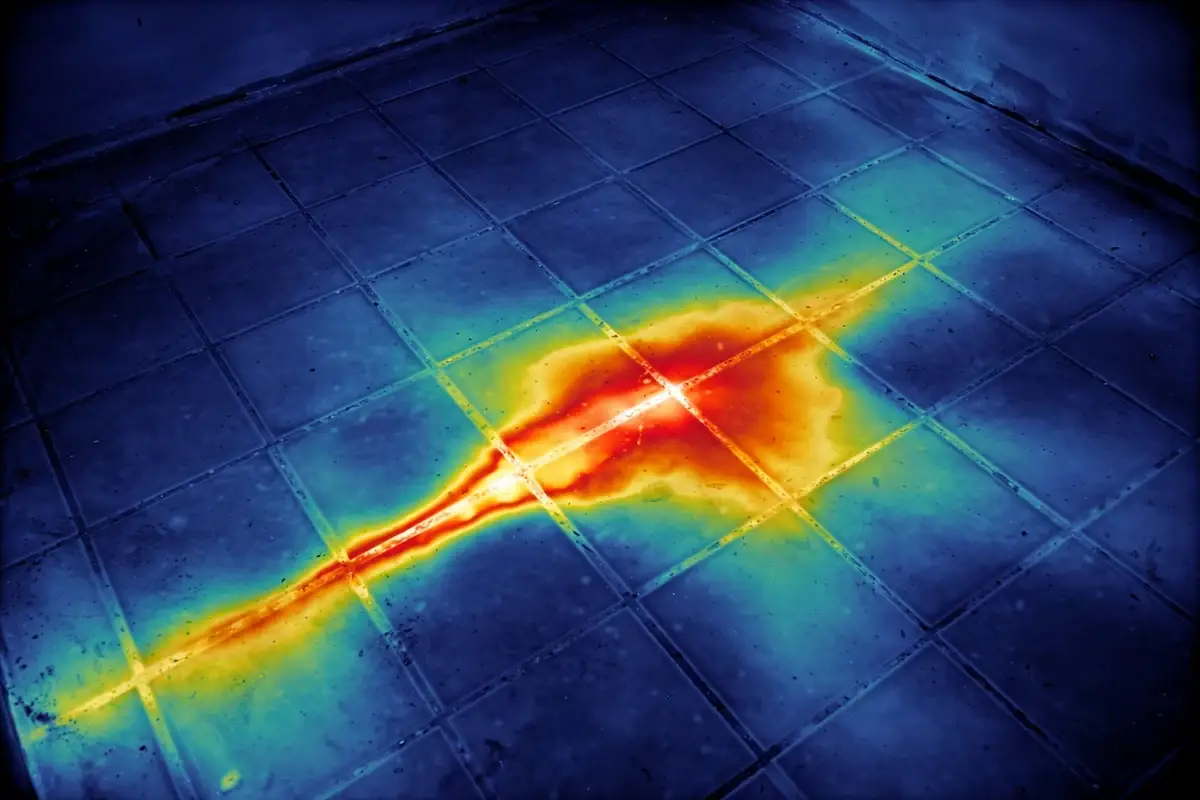
It often starts as a curiosity: a patch of kitchen tile that feels warm in bare feet, or a hallway runner over a spot that never seems to cool down. In a home with a slab foundation, a persistently warm floor is one of the most specific symptoms in all of plumbing diagnostics. It almost always means one thing: a hot-water line leaking beneath the concrete. This article explains why hot-water leaks announce themselves this way, how to confirm what you are feeling, and what happens next.
Why Hot-Water Leaks Warm the Floor
Your water heater keeps the hot-water lines charged with water at a high temperature around the clock. When one of those lines develops a pinhole or split under the slab, that hot water escapes continuously and soaks into the soil and concrete directly around the break. Concrete conducts heat reasonably well, so the warmed slab telegraphs that heat upward through tile, stone, hardwood, and even thin carpet. The result is a warm patch on the floor surface, often a few feet across, centered roughly above the leak. Cold-water leaks cannot do this, which is why a warm floor points specifically at the hot side of the system.
How to Confirm What You Are Feeling
Before concluding anything, rule out innocent explanations. Sunlight through a window can warm a patch of floor during the day, so check whether the warmth persists at night or on cloudy days. A heating vent or a refrigerator's condenser coils can warm nearby flooring, so note what sits above or beside the spot. The real test is persistence and pattern: a leak-driven warm spot stays warm around the clock, feels warmest at its center, and does not move. Walk the area in bare feet morning and evening for a few days and map the boundaries with painter's tape. If the warm zone is stable and unexplained, treat it as a genuine symptom.
The Water Heater Works Overtime
A leaking hot-water line forces your water heater to run far more than normal, because escaping hot water is constantly replaced by cold incoming water that must be reheated. Listen for a water heater that fires or draws power far more often than it used to, or hot water that runs out faster during showers. Gas bills or electric bills climbing alongside the water bill form a telling trio: water usage up, energy usage up, and a warm floor. That combination is nearly diagnostic of a hot-water slab leak before any instrument is even unpacked.
Why Hot Lines Fail More Often
Hot-water lines live a harder life than cold lines. Thermal expansion and contraction with every heating cycle flexes the pipe and stresses joints and fittings, thousands of cycles per year. Higher temperatures also accelerate chemical corrosion processes, both inside from water chemistry and outside from soil contact. In Rancho Palos Verdes homes with original copper plumbing, the hot-water runs are frequently the first to develop pinholes, sometimes years before the cold lines show trouble. If your home has had a hot-side pinhole before, the remaining hot-water runs deserve attention as a system, not just the repaired spot.
What the Warm Spot Does Not Tell You
A warm floor confirms a hot-water leak but not its exact location. Heat spreads through concrete and soil, so the warmest surface point can sit several feet from the actual break, with water migrating along the path of least resistance. Digging where the floor feels warmest is a common and expensive mistake. {Thermal imaging, /electronic-slab-leak-location/} reads the heat plume's shape to trace it back toward the source, and acoustic listening confirms the precise break point. The surface symptom gets the specialist to the right neighborhood; the instruments find the exact address.
Secondary Damage From Hot-Water Leaks
Hot water does more collateral damage than cold. Sustained heat and moisture delaminate tile adhesives, warp hardwood, and break down carpet backing faster than cold water alone. The constant warmth also creates ideal conditions for mold growth beneath flooring, where it can spread unseen. Meanwhile the water heater's nonstop operation shortens its service life and inflates energy bills every single day the leak runs. These compounding costs are why a warm floor deserves prompt action rather than a wait-and-see approach.
Repair Paths for Hot-Water Line Leaks
Once {detection, /slab-leak-detection/} confirms the location, several repair paths exist. A spot repair through the slab fixes the break directly when the rest of the line is sound. {Rerouting the hot-water line, /hot-water-line-slab-leak-repair/} through walls or the attic abandons the under-slab run entirely, which many homeowners prefer when the original line is aging, since it removes the pipe from the corrosive soil environment for good. {Trenchless options, /trenchless-slab-leak-repair/} can replace the line with minimal slab disturbance. The right choice depends on the line's overall condition, your home's layout, and how much of the original pipe you want to keep trusting.
Acting on a Warm Floor
Do the confirmation checks described above, note the warm zone's boundaries and when you first noticed it, and watch your next water and energy bills for the telltale climb. Then bring in a specialist rather than living with it; every week of hot water escaping under your slab is a week of energy waste, soil erosion, and flooring damage. Call (833) 713-2101 and an independent local slab leak specialist serving Rancho Palos Verdes and the South Bay, who can confirm the leak with thermal imaging and walk you through the repair options that fit your home will confirm the leak with thermal imaging and walk you through the options.
Suspect a Slab Leak? Talk to a Specialist Today
One call connects you with a local slab leak professional serving Rancho Palos Verdes, CA — day or night.
Call (833) 713-2101Frequently Asked Questions
What does a warm spot on the floor mean?
A persistently warm or hot patch on the floor, present day and night and unexplained by sunlight or heating vents, is the hallmark of a hot-water line leak under the slab. Escaping hot water warms the concrete above the break, and that heat reaches the floor surface. Cold-water leaks do not create warm spots.
How can I be sure the warm spot is a leak and not something else?
Map it with painter's tape over several days, checking morning and evening. If the warm zone stays in the same place around the clock and no vent, appliance, or sun pattern explains it, treat it as a real symptom. Note when you first noticed it and whether your water and energy bills have climbed.
Will a hot-water slab leak raise my energy bill too?
Yes. A leaking hot-water line makes the water heater run constantly to reheat the escaping water, which drives up gas or electric bills alongside the water bill. If all three are climbing and the floor is warm, the diagnosis is nearly certain before any testing.
Why do hot-water lines fail more than cold-water lines?
They fail more often because daily heating cycles expand and contract the pipe, stressing joints, and higher temperatures accelerate corrosion. In mid-century Rancho Palos Verdes homes with original copper, hot-water runs commonly develop pinholes years before cold-water lines do.
How is the exact leak location found?
Thermal imaging traces the heat plume back toward the source and acoustic sensors pinpoint the exact break, since surface warmth can sit several feet from the actual leak. Call (833) 713-2101 to be connected with a local specialist who can locate it precisely before any concrete is opened.