Trenchless Slab Leak Repair Explained: How It Works and When It Fits
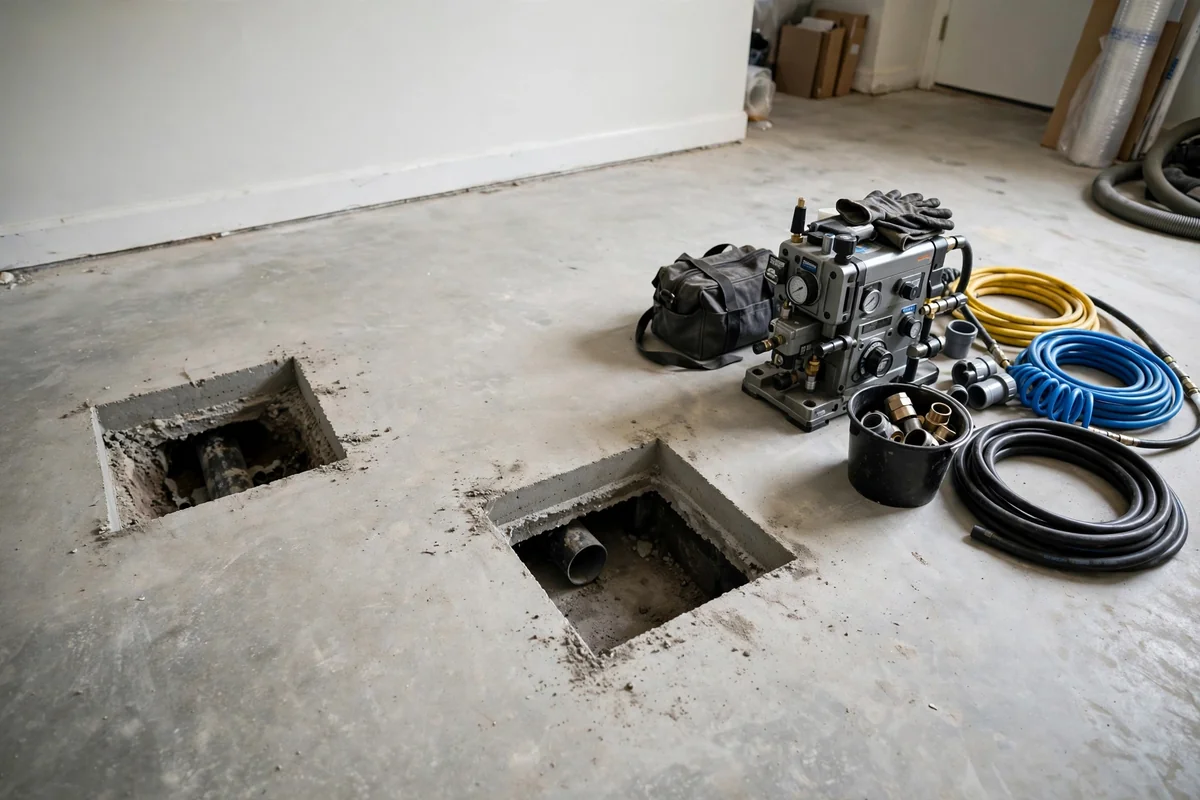
The phrase trenchless repair gets used a lot in plumbing marketing, and it is worth understanding precisely what it means for a slab leak. In the context of under-slab water lines, trenchless repair refers to methods that replace or rehabilitate a failed pipe with minimal breaking of the concrete slab, usually by pulling a new line through the path of the old one or by working through small, strategic access points. This article explains how these methods work, when they are the right choice, and where their limits lie, so you can evaluate the option with clear eyes.
What Trenchless Means Under a Slab
Traditional slab leak repair opens the concrete directly above the break, a trench through your floor to reach the pipe. Trenchless methods avoid that large opening. Instead of digging down to the pipe along its length, the new pipe is installed along the old pipe's route from one or two small access points, often at the slab edge, in a utility area, or through an existing penetration. The old line is abandoned in place or used as a guide path. The defining benefit is what does not happen: no jackhammer trench across your living room, no large-scale flooring demolition, and no lengthy concrete restoration.
Pipe Pull-Through: The Core Technique
The most common trenchless approach for under-slab water lines is a pull-through replacement. After the failed line is isolated and drained, a flexible new pipe, typically PEX or similar, is attached to the old line or to a pulling cable threaded through it, and drawn through the existing underground path from one access point to another. The old pipe acts as a sleeve and guide, so the new line follows the proven route without excavation along its length. Fittings are then connected at each end to tie the new run into the existing system. The method works best when the old pipe's path is relatively straight and unobstructed.
Small Access Points Instead of Trenches
Every trenchless job still needs access, and understanding where those openings go prevents surprises. Typical access points include a small excavation at the slab edge where the line enters, an opening in a garage or utility room floor, or an existing cleanout or penetration that can be reused. These openings are dramatically smaller than a full trench, often just large enough to work the pulling equipment and make connections. The tradeoff is that the work happens in tight quarters and requires skill to execute cleanly, which is why the experience of the crew matters more, not less, with trenchless methods.
When Trenchless Is the Right Choice
Trenchless repair shines in specific situations. When the failed line runs beneath expensive or hard-to-match flooring, avoiding a trench preserves the floor you have. When the leak sits under a kitchen island, a tiled shower, or built-in cabinetry that would be enormously disruptive to remove, going around the obstacle beats going through it. When the home's layout offers clean access at both ends of the run, the pull-through is straightforward. And when the existing pipe is deteriorated along its whole length, replacing the entire run trenchlessly solves the systemic problem in one project rather than inviting repeat spot repairs. A {trenchless repair specialist, /trenchless-slab-leak-repair/} evaluates these factors during planning.
Where Trenchless Hits Its Limits
Honesty requires the other side. Trenchless pull-through needs a viable path: if the old line is crushed, severely offset at a joint, or blocked by an obstruction, the new pipe cannot follow it. Sharp bends and complex manifold layouts under the slab can defeat the pull. If {detection, /slab-leak-detection/} shows the failure is a single isolated pinhole in otherwise excellent pipe, a small spot repair may be simpler and more appropriate than replacing the whole run. And trenchless methods address the pipe, not secondary damage; if the leak already destroyed flooring or fed mold growth, that restoration happens regardless of how the pipe itself is fixed.
Trenchless vs. Rerouting: Clearing Up Confusion
Homeowners often conflate trenchless repair with pipe rerouting, but they are different strategies. Trenchless replacement keeps the new pipe on the old underground path, under the slab. Rerouting abandons the under-slab path entirely and runs the new line through walls, ceilings, or the attic. Trenchless preserves the original routing with minimal slab disturbance; rerouting removes the pipe from the soil environment altogether. Each has situations where it wins, and a good specialist explains both rather than selling one method for every job. Our comparison of {rerouting versus tunneling, /blog-rerouting-vs-tunneling/} explores the reroute side in depth.
What to Ask Before Choosing Trenchless
Ask how the new line's path will be verified as clear before work begins, where exactly the access points will be, and what happens if the pull encounters an obstruction mid-run. Ask what pipe material is being installed and how connections at each end are made and tested. Ask what surface restoration is included for the access points, and how the abandoned old line is sealed so it cannot collect water. Finally, ask about warranty terms for the new line specifically. Clear answers to these questions separate a well-planned trenchless project from a hopeful one. To find out whether your leak is a genuine trenchless candidate, call (833) 713-2101 and talk it through with an independent local slab leak specialist serving Rancho Palos Verdes who can determine whether your leak is a genuine trenchless candidate and explain the plan in plain terms before any work begins.
Suspect a Slab Leak? Talk to a Specialist Today
One call connects you with a local slab leak professional serving Rancho Palos Verdes, CA — day or night.
Call (833) 713-2101Frequently Asked Questions
What is trenchless slab leak repair?
Trenchless slab leak repair replaces or rehabilitates a failed under-slab water line with minimal concrete breaking, usually by pulling a new line through the old pipe's path from small access points. It avoids cutting a trench across your floors while still giving you a new, reliable line.
Does trenchless mean no digging at all?
No. Every method needs some access, typically small excavations at the slab edge or in a utility area, plus connection points at each end of the new run. The openings are far smaller than a traditional trench, but trenchless means minimal breaking, not zero breaking.
When is trenchless the best option?
It is ideal when the failed line runs under expensive flooring, beneath immovable fixtures like kitchen islands, or when the whole run is deteriorated and needs full replacement. It needs a clear, pullable path through the old line's route. A specialist confirms candidacy during planning.
What is the difference between trenchless repair and rerouting?
Trenchless keeps the new pipe on the old underground path beneath the slab. Rerouting abandons the under-slab route entirely and runs new pipe through walls or the attic. Both avoid large slab trenches, but they solve the problem in fundamentally different ways.
What should I ask before agreeing to trenchless repair?
Ask about path verification, access point locations, the contingency plan if the pull hits an obstruction, the new pipe material, connection and testing methods, restoration of access points, and warranty terms. Detailed answers indicate a well-planned project.