Tree Roots vs. Slab Pipes: Protecting Your Plumbing From the Landscape
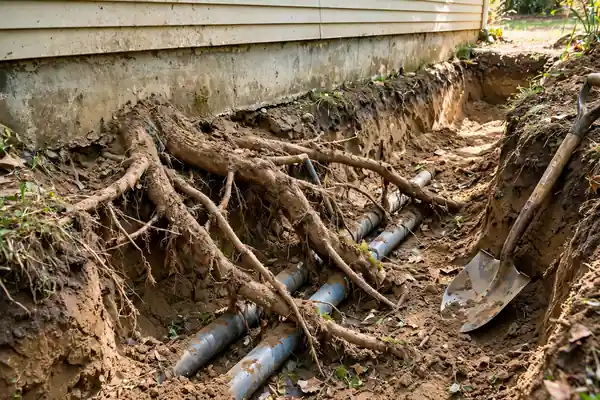
Rancho Palos Verdes is famous for its mature landscaping: towering eucalyptus, decades-old pines, jacarandas, and the lush plantings that make Peninsula neighborhoods feel established. Those same trees, however, are relentless seekers of water, and their roots are a well-known threat to underground plumbing. While roots most famously invade sewer and drain lines, they can also cause real trouble for water lines around and beneath slabs. This article explains how roots interact with slab-area plumbing, which trees pose the biggest risk, and how to protect your lines without sacrificing your landscape.
How Roots Find Pipes
Tree roots do not punch through sound pipe; they exploit weaknesses. A root tip following a moisture gradient in the soil encounters a pipe joint with a hairline gap, a tiny corrosion pit weeping minute amounts of water, or a crack from settlement, and it grows toward that moisture. Once inside or pressed against the defect, the root thickens year after year, wedging the opening wider and eventually obstructing or breaking the line. Under-slab water lines are somewhat protected by the concrete above, but the sections where lines enter the house through the foundation, run through planter-adjacent soil, or connect to exterior hose bibs are fully exposed to root pressure.
Which Pipes Are Actually at Risk
It is important to be precise here. Tree roots overwhelmingly target drain, sewer, and irrigation lines, which carry nutrient-rich water at low pressure and have many joints. Pressurized potable water lines under slabs are less attractive and more resistant: the constant outward pressure works against root entry, and copper and PEX have fewer joints than old clay or cast-iron drains. But less vulnerable does not mean immune. A pressurized line with an existing pinhole leak creates exactly the persistent moisture signal roots follow, and a root mass pressing against a corroded section can finish what corrosion started. The realistic risk is roots worsening an existing weakness, not roots attacking perfect pipe.
The Usual Suspects in Peninsula Landscaping
Some species are far more aggressive than others. Eucalyptus, common across the Peninsula, sends fast-growing roots astonishing distances in search of water. Ficus, willows, and certain pines are similarly ambitious. Even moderate species become problematic when planted too close to the house or when irrigation trains roots toward the foundation. Rancho Palos Verdes lots often combine mature, thirsty trees with original 1960s plumbing running through the root zone, which is the exact overlap where problems occur. If a large tree stands within twenty feet of your foundation and your plumbing is original, the combination deserves respect.
Warning Signs of Root-Related Pipe Trouble
For drain lines, the signs are familiar: slow drains, gurgling, and recurring backups. For pressurized lines near the slab, root involvement is sneakier. A slab leak that recurs in the same area after repair, moisture appearing near the foundation where a large tree's roots run, or a leak at the exact point a line passes a major root mass all suggest roots played a role. During {detection and repair planning, /slab-leak-detection/}, tell the specialist about nearby large trees; it changes how they interpret the failure and may change the recommended fix, since repairing a line in an active root zone without addressing the roots invites a repeat.
Root Barriers and Smart Planting
Prevention is far cheaper than repair. When planting new trees, keep aggressive species well away from the house and from known pipe routes; thirty feet is a reasonable minimum for the thirstiest species. Root barriers, which are rigid panels buried vertically between trees and structures, deflect root growth downward and away from foundations and pipes. They work best installed proactively but can help in existing situations. Fix irrigation overspray that keeps soil near the foundation constantly wet, since wet soil both accelerates pipe corrosion and invites root growth toward the house. These are landscaping decisions with plumbing consequences.
Dealing With Existing Root Conflicts
If roots have already reached your lines, the response depends on severity. For drain lines, mechanical clearing or hydro-jetting removes the intrusion, though regrowth is likely without addressing the entry point. For pressurized water lines compromised near roots, {rerouting the line, /slab-leak-pipe-rerouting/} away from the root zone often makes more sense than repairing in place, since a repair in the same hostile soil faces the same roots again. In some cases, selective root pruning by a qualified arborist combined with a barrier can defuse the conflict while preserving a valued tree. Removing a heritage tree is a last resort, but an honest assessment weighs the tree's value against the plumbing's survival.
Protecting Lines During Landscaping Projects
Any major landscaping work near the house is an opportunity to protect plumbing. Before planting, know roughly where your water and sewer lines run; a {detection specialist, /electronic-slab-leak-location/} or a utility locate service can help map them. Choose species with less aggressive root systems for foundation-adjacent planting, install root barriers as part of the project rather than as an afterthought, and direct irrigation away from the slab edge. Coordinating the landscape plan with the plumbing reality beneath it prevents the all-too-common story of a beautiful new planting causing a slab leak five years later. Call (833) 713-2101 and an independent local slab leak specialist serving Rancho Palos Verdes who can assess whether roots are a factor in your situation and recommend a fix that accounts for them can determine whether roots are a factor in your situation.
Suspect a Slab Leak? Talk to a Specialist Today
One call connects you with a local slab leak professional serving Rancho Palos Verdes, CA — day or night.
Call (833) 713-2101Frequently Asked Questions
Do tree roots attack water lines under slabs?
Primarily drain and sewer lines, which carry nutrient-rich water at low pressure through many joints. Pressurized potable water lines under slabs are more resistant, but roots exploit existing weaknesses like pinhole leaks or corroded sections, and root pressure against a weakened line can finish the failure. The realistic risk is roots worsening an existing problem.
Which trees are the worst for underground pipes?
Eucalyptus, ficus, willows, and some pines are the most aggressive, sending roots long distances for water. Even moderate species cause trouble planted too close to the foundation. On the Peninsula, mature eucalyptus near 1960s plumbing is the classic risky combination.
How can I protect my pipes from tree roots?
Keep aggressive species at least thirty feet from the house and pipe routes, install vertical root barriers between trees and structures, fix irrigation overspray that wets soil near the foundation, and know where your lines run before any major planting project.
What if roots caused my slab leak?
Tell your detection specialist about nearby large trees, since it changes the diagnosis and the recommended fix. Repairing a line in an active root zone without addressing the roots invites a repeat failure; rerouting away from the root zone is often the wiser solution.
How are existing root intrusions handled?
Mechanical clearing or hydro-jetting removes intrusions from drain lines, though regrowth is likely without fixing the entry point. Selective root pruning by a qualified arborist plus a root barrier can resolve conflicts while preserving valued trees. Tree removal is a last resort after weighing the tree's value against ongoing plumbing damage.