What Affects the Cost of Slab Leak Repair (Without the Guesswork)
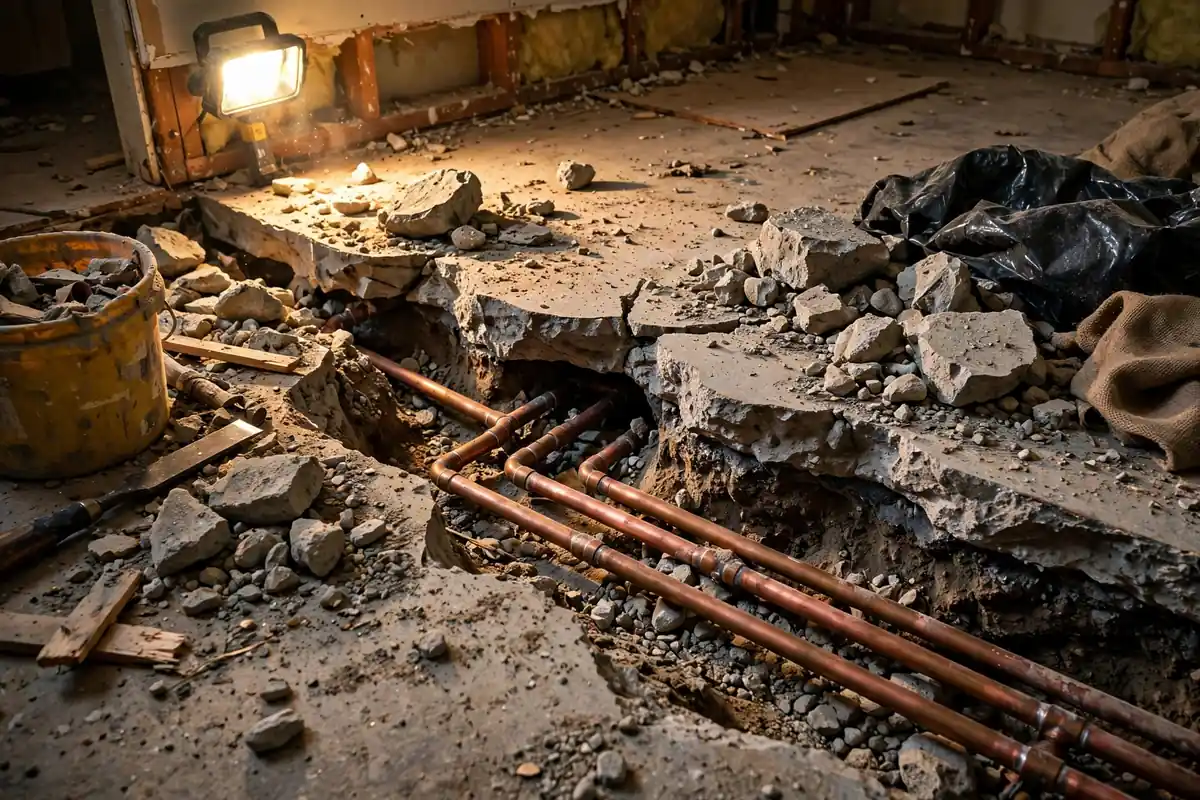
Ask what a slab leak repair costs and you will get a frustrating answer: it depends. That is not evasiveness; it is honesty. Two leaks in the same neighborhood can be completely different jobs once you account for where the pipe broke, what sits above it, how the pipe is accessed, and what the water damaged along the way. This article explains the factors that actually drive the scope and cost of a slab leak repair in Rancho Palos Verdes, so you can understand quotes, ask better questions, and avoid surprises. You will not find price lists here, because any number quoted without detection is a guess, but you will find everything that turns a small job into a big one.
Factor One: The Access Method
How the failed pipe is reached is usually the largest cost driver. A direct spot repair means opening the slab at the leak location, fixing that section of pipe, and patching the concrete. A {pipe rerouting, /slab-leak-pipe-rerouting/} abandons the under-slab line entirely and runs a new line through walls or the attic, which avoids breaking the slab but involves more linear feet of new pipe and wall patching. {Under-slab tunneling, /under-slab-tunneling/} digs beneath the foundation from outside to reach the pipe from below, preserving interior floors but requiring excavation labor. Each method suits different situations, and the right choice depends on the leak's position, the pipe's overall condition, and your home's layout.
Factor Two: Leak Location Under the Slab
A break under an open garage corner is straightforward to reach. A break under a kitchen island, a tiled shower, or a load-bearing wall is not. Leaks beneath built-in cabinetry, heavy stonework, or rooms with complex flooring take more labor to access and restore. Depth matters too: lines buried deeper or running beneath thickened footing sections require more excavation. This is why precise {electronic leak location, /electronic-slab-leak-location/} pays for itself; a location accurate to inches keeps the opening small, while a vague location forces a larger exploratory area.
Factor Three: The Condition of the Whole Line
A single pinhole in an otherwise healthy pipe is a different situation from a line riddled with corrosion. During detection and repair planning, the specialist assesses whether the failure looks isolated or systemic. In Rancho Palos Verdes homes with original 1960s copper, finding one pinhole often means more are coming, which can make a full reroute or {epoxy lining, /epoxy-pipe-lining/} more sensible than a spot fix that leaves aging pipe in the ground. The pipe's overall condition shapes whether you are paying for one repair or the first of several.
Factor Four: Flooring and Finish Restoration
Opening the slab is only half the job; putting the room back together is the other half. Carpet is the simplest to restore, while tile, hardwood, natural stone, and polished concrete demand careful removal, matching, and reinstallation. If your flooring is a discontinued tile or a custom hardwood, sourcing matching material adds time and expense. Concrete patching, moisture testing before relaying floors, and baseboard and paint touch-ups all factor in. Homeowners sometimes focus only on the plumbing quote and are surprised by the restoration scope, so ask for both sides of the project upfront.
Factor Five: Secondary Water Damage
A leak caught in week one and a leak that ran for six months are different projects. Prolonged moisture can saturate drywall, swell cabinetry, warp subflooring, and feed mold growth that requires remediation. Drying equipment, dehumidification, and mold remediation each add scope beyond the pipe repair itself. This factor is the strongest argument for acting fast when symptoms appear: early detection does not just find the leak sooner, it shrinks everything the leak had time to damage.
Factor Six: Permits, Inspections, and Documentation
Depending on the repair method and local requirements, permits and inspections may apply, particularly for reroutes that alter the plumbing system. Proper documentation, including the detection report and photos, also matters if you plan to file a homeowner's insurance claim, and claim-related paperwork takes professional time. A thorough specialist will explain which administrative steps your project needs rather than leaving you to discover them mid-job.
How to Compare Quotes Fairly
When you gather quotes, compare scope, not just totals. Make sure each quote specifies the access method, the linear feet of pipe involved, exactly what floor and finish restoration is included, and how secondary damage is handled. Ask whether detection is included or separate, what happens if additional leaks are found during the work, and what warranty terms apply to both the pipe work and the restoration. A detailed, itemized quote from a specialist who detected the leak precisely is worth far more than a low number built on assumptions. For a quote that reflects your actual home rather than a generic job, call (833) 713-2101 and speak with an independent local slab leak specialist serving Rancho Palos Verdes who will explain every factor above as it applies to your specific leak, so the quote you receive reflects your home, not a generic job.
Suspect a Slab Leak? Talk to a Specialist Today
One call connects you with a local slab leak professional serving Rancho Palos Verdes, CA — day or night.
Call (833) 713-2101Frequently Asked Questions
What is the biggest factor in slab leak repair cost?
Usually the access method, because it determines how much concrete work, labor, and floor restoration the job involves. A spot repair through the slab, an overhead reroute, and under-slab tunneling each have very different labor profiles, and the right choice depends on the leak location, pipe condition, and your home's layout.
Does my flooring type affect the price?
Yes. Tile, hardwood, and stone cost more to remove and replace or match than carpet or vinyl. Homes with radiant-style tile layouts or discontinued flooring materials add complexity, because matching the existing floor after a slab opening takes real craftsmanship.
Will homeowner's insurance cover any of this?
Often it can. Many policies distinguish between the cost of accessing the leak, such as opening the slab, and the cost of repairing the pipe itself. Coverage varies widely by policy and by whether the damage is sudden versus long-term, so review your policy and talk to your agent before assuming either way.
Is leak detection billed separately from the repair?
Detection is usually a separate, smaller service than the repair itself. It involves diagnostic equipment and a written location report, and it is worth doing properly because an accurate location keeps the repair area, and therefore the repair scope, as small as possible.
Why can't anyone quote a price over the phone?
Because every leak sits in a unique spot under a unique slab with unique flooring above it. A pinhole under an accessible garage corner and a corroded line under a kitchen island are fundamentally different jobs, so reputable specialists quote after detection rather than guessing blind.