Slab Leak Repair Timeline: What to Expect From Diagnosis to Done
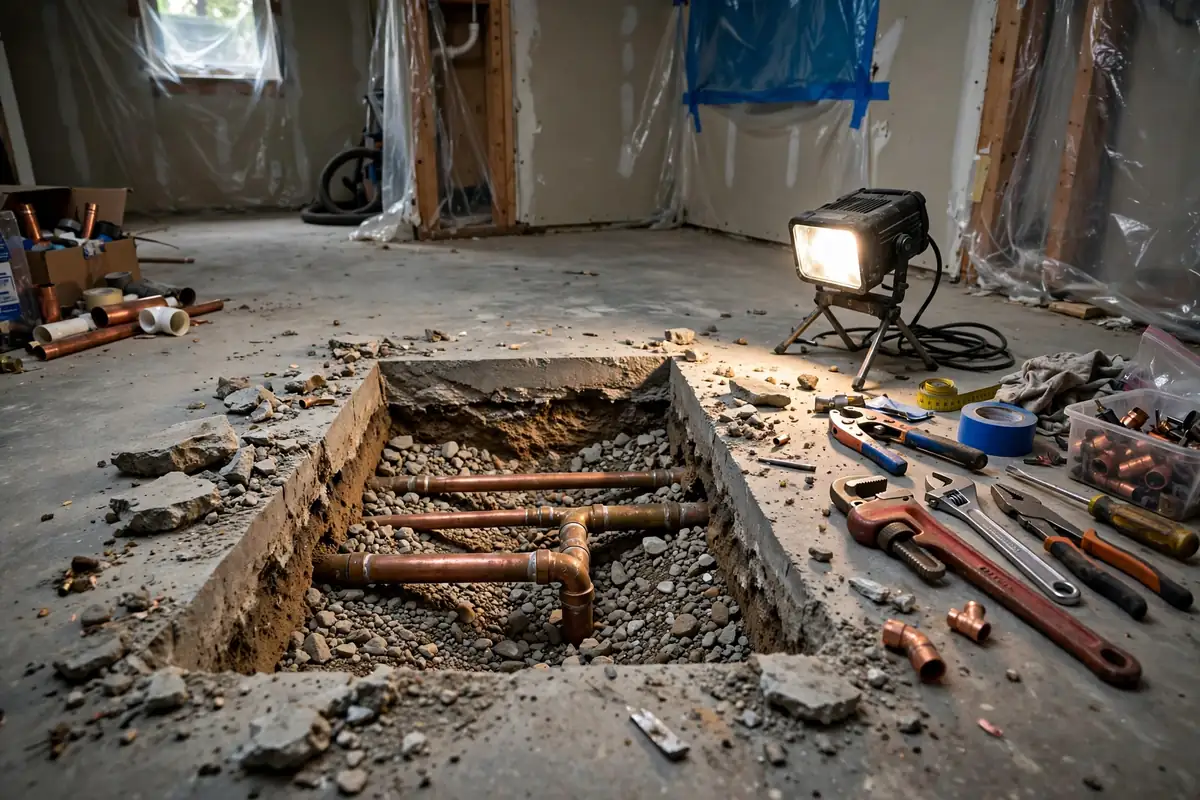
One of the first questions homeowners ask after a slab leak diagnosis is how long the whole ordeal will take. The answer varies widely because a slab leak project is really several phases, detection, repair, drying, and restoration, each with its own timeline and its own variables. This article walks through a realistic sequence from first suspicion to final walkthrough, explains what stretches or compresses each phase, and helps you plan your household around the work.
Phase One: Detection and Diagnosis
The diagnostic phase is the shortest. A {detection visit, /electronic-slab-leak-location/} typically takes one to three hours on site, and you usually receive the location report the same day. What extends this phase is rarely the testing itself but the scheduling around it: confirming symptoms, arranging access, and, in some cases, waiting for a second opinion. Homeowners who have already done a meter test and documented symptoms, as described in our {first-steps guide, /blog-first-steps-suspected-slab-leak/}, compress this phase to a single visit. From first call to confirmed diagnosis, most homeowners are looking at days, not weeks.
Phase Two: Repair Planning and Decision
With the leak located, the specialist lays out repair options: spot repair through the slab, {rerouting, /slab-leak-pipe-rerouting/}, {tunneling, /under-slab-tunneling/}, {trenchless replacement, /trenchless-slab-leak-repair/}, or {lining, /epoxy-pipe-lining/}. This decision phase takes as long as you need it to; rushing it is a mistake. Gathering a second quote, discussing options with household members, checking insurance coverage, and arranging financing or scheduling around work and school all happen here. A thoughtful homeowner might take a week or two at this stage, and that is time well spent. The leak is not getting dramatically worse over a fortnight of careful decision-making, provided it is not causing active flooding.
Phase Three: The Repair Work
The active repair phase is where timelines diverge most. A straightforward spot repair through the slab can be completed in a day or two: open the concrete, fix the pipe section, pressure-test, and patch. A reroute through walls and attic typically takes several days, with drywall patching and paint adding time at the end. Tunneling is measured in days of underground labor depending on tunnel length and soil conditions. Trenchless pull-through and lining projects each have their own multi-day sequences of preparation, execution, and curing. Weather matters for exterior work; tunneling in saturated winter soil is slower than in dry conditions. The specialist's project plan should give you a day-by-day outline before work begins.
Phase Four: Drying
After the pipe is fixed, wet materials need active drying, and this phase cannot be rushed without consequences. Dehumidifiers and directed airflow run for several days while moisture meters track progress in the slab, framing, and remaining finishes. Concrete releases water slowly, so a slab section that looks dry on the surface may still read wet an inch down. Flooring, paint, and new drywall should wait for verified dry readings; covering damp materials traps moisture and invites mold. Most dry-outs take the better part of a week, longer for extensive saturation. This is also when any mold remediation happens, since remediation follows drying in the correct sequence.
Phase Five: Floor and Finish Restoration
Restoration is the phase homeowners feel most, because it returns the house to normal. Concrete patches cure, flooring is reinstalled or replaced, baseboards go back on, and paint touch-ups finish the job. Simple carpet restoration can wrap up in a day or two; matching and installing tile or hardwood takes longer, especially if materials must be ordered. Custom or discontinued flooring is the classic timeline-stretcher here, adding weeks while matching material is sourced. Our guide to {restoring floors after repair, /blog-restoring-floors-after-repair/} covers this phase in detail. Plan for this phase to take as long as the repair itself, sometimes longer.
What Stretches Timelines Most
A few factors consistently extend projects. Discovering additional leaks or systemic corrosion mid-repair changes the scope. Mold remediation adds its own sequence. Permit and inspection scheduling introduces external dependencies. Material lead times, particularly for matching flooring, stall the finish work. And indecision, delaying the repair-method choice or the flooring selection, pauses everything downstream. The antidote is front-loaded diligence: thorough detection, decisive planning, early material selection, and clear communication with the specialist about sequencing.
Coordinating With Insurance Timelines
If you plan to file a homeowner's insurance claim, the timeline conversation starts before work begins. Insurers typically want to see the damage before restoration covers it up, so schedule the adjuster's inspection between the repair and the restoration phases, not after everything is finished. Keep the damaged materials and photograph everything in place; once new flooring is down, the evidence of what the water destroyed is gone. Share your project timeline with the adjuster early so inspections do not become the bottleneck that stalls your restoration. Good sequencing here prevents the frustrating situation where the house is ready for floors but the claim paperwork is not.
Planning Your Household Around the Work
Ask the specialist upfront which days will be the most disruptive, whether water will be off and when, and which rooms will be work zones. For multi-day projects, establish which bathroom and kitchen facilities remain usable. Protect belongings in work areas, plan for noise during concrete work, and arrange for pets and sensitive family members to be elsewhere on the loudest days. A clear day-by-day plan from the specialist turns an intimidating project into a manageable schedule. For a day-by-day plan mapped to your specific home, (833) 713-2101 connects you with an independent local slab leak specialist serving Rancho Palos Verdes who will map out the full timeline for your specific situation before any work begins, so you know what to expect at every stage.
Suspect a Slab Leak? Talk to a Specialist Today
One call connects you with a local slab leak professional serving Rancho Palos Verdes, CA — day or night.
Call (833) 713-2101Frequently Asked Questions
How long does a slab leak repair take overall?
Most projects run from a few days to a few weeks end to end. Detection takes hours, the repair itself takes one to several days depending on the method, drying takes several days, and floor restoration can take as long as the repair. Matching specialty flooring materials is the most common reason projects stretch longer.
Which phase is the fastest?
Detection is quickest, usually a single visit of one to three hours with same-day results. The diagnostic phase only extends when scheduling or second opinions add days. Doing a meter test and documenting symptoms beforehand keeps it to one efficient visit.
Do I need to stay home during the repair?
No. Plan to be available for key decisions and to provide access, but you do not need to supervise continuously. Establish which days are most disruptive, confirm water shutoff schedules, and arrange for the noisiest phases if you work from home. A reputable crew works independently once the plan is set.
Will my water be shut off during the repair?
Yes, in most cases. Repair crews need water off during active pipe work and pressure testing, usually for hours at a time rather than whole days. Your specialist should tell you in advance which days and hours the water will be off so you can plan around it.
What causes the biggest timeline delays?
Discovering additional leaks mid-repair, mold remediation, permit and inspection scheduling, material lead times for matching flooring, and delayed decisions on repair method or finishes. Thorough detection, early material selection, and decisive planning are the best defenses against delays.