Slab Leaks in New Construction: Why New Homes Are Not Immune
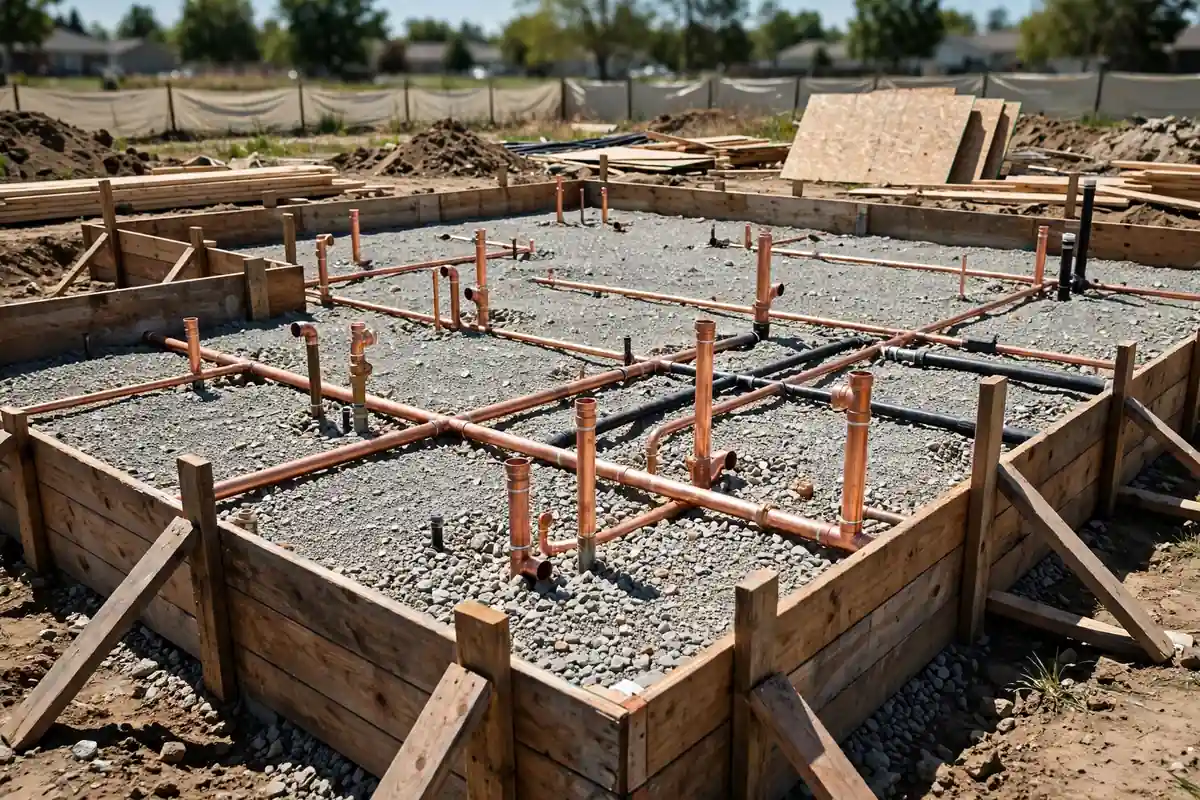
It feels like it should be impossible: a brand-new home, modern materials, fresh inspections, and yet water is coming up through the slab. But new-construction slab leaks happen, and they follow their own distinct patterns. The causes have little to do with age or corrosion and everything to do with installation quality, site conditions, and the settling that every new structure undergoes. If you own a recently built home in the South Bay and suspect a slab leak, this article explains why it can happen and how the situation differs from leaks in older homes.
Installation Defects: The Leading Cause
Most new-construction slab leaks trace to something that went wrong during installation. A copper or PEX line kinked during the rough-in creates a weak point that holds pressure initially but fails under years of cycling. A poorly soldered or crimped fitting weeps slowly from day one, too slowly to notice during construction but steadily enough to saturate soil over months. A line laid without proper bedding can rest on a sharp rock or debris that abrades the pipe as the slab settles. Nails or screws from subsequent trades, flooring installers, cabinet setters, finish carpenters, can pierce a line that was pressure-tested fine before they arrived. These are workmanship failures, not material failures, and they can appear within the first year or two.
Settlement and Soil Movement
Every new home settles. As the structure's full weight loads the soil and the ground consolidates, the slab and everything under it shift slightly. In most cases the plumbing accommodates this, but where a line was installed taut, poorly supported, or crossing a soil transition, settlement can stress joints and fittings beyond their tolerance. On graded lots and hillside-adjacent parcels common around Rancho Palos Verdes, differential settlement, where one part of the foundation settles more than another, creates shear forces at pipe penetrations through the slab. A line that survived the builder's pressure test can fail a year later when the ground beneath it finishes moving.
Why New Leaks Hide Longer
Paradoxically, new homes can conceal slab leaks longer than old ones. Modern slabs often include vapor barriers and better-compacted base material that slow moisture migration upward, so a leak saturates a large area below before anything shows on the surface. New flooring, fresh paint, and tight construction mask the early musty odors and subtle dampness that would be obvious in an older home. And homeowners understandably do not suspect plumbing failure in a new house, so the classic symptoms get attributed to other causes: the water bill increase blamed on new landscaping, the warm floor spot dismissed as a heating quirk. Awareness is lower precisely when vigilance would help most.
The Builder Warranty Question
New homes typically carry builder warranties covering defects in workmanship and materials for a defined period, often with longer coverage for structural elements. A slab leak caused by an installation defect may fall under warranty, but the path is rarely simple. Builders may dispute whether the failure is a defect or the result of subsequent conditions, and warranty response times can be slow while water damage compounds. Document everything from the first symptom exactly as you would for an insurance claim, get an independent {detection report, /electronic-slab-leak-location/} establishing the failure's nature and location, and notify the builder in writing promptly. An independent diagnosis strengthens your position considerably compared to relying solely on the builder's own assessment.
Detection Is the Same, Repair Choices Differ
The diagnostic process does not change with the home's age: {slab leak detection, /slab-leak-detection/} with acoustic, thermal, and pressure methods pinpoints the break regardless of when the house was built. Repair strategy, however, often differs. In a new home, the rest of the plumbing is presumably sound, so a targeted repair of the defective section usually makes more sense than whole-system solutions like rerouting. The key question becomes who pays and who performs the work. If the builder accepts responsibility, their contractor does the repair; if warranty coverage is disputed or too slow, many homeowners proceed independently to stop the damage and sort out reimbursement afterward.
Red Flags Specific to New Builds
Certain findings point strongly toward installation defects rather than bad luck. Multiple leaks appearing within the first two years, failures clustered at fittings rather than mid-pipe, and leaks at locations where other trades worked after the pressure test, such as under newly set cabinets or near flooring nail patterns, all suggest workmanship issues. A {detection report, /electronic-slab-leak-location/} that documents the failure mode, for instance a puncture consistent with a fastener versus a corrosion pinhole, becomes powerful evidence. Photograph the exposed failure before repair if possible; the visual record of a nail hole or a kinked line tells a story no invoice can.
Protecting Yourself in a New Home
Do not let the newness of your home lower your guard. Learn the classic slab leak symptoms, do an occasional meter test, and take any water bill anomaly seriously even in year one. Keep all builder warranty documents accessible and note their notification requirements and deadlines. If you finish a basement-level space or add hardscaping that changes drainage, consider how it affects moisture around the foundation. And remember that {foundation leak issues, /foundation-leak-repair/} in new construction deserve the same prompt professional attention as in older homes. Call (833) 713-2101 to be connected with an independent local slab leak specialist serving the South Bay who can diagnose the failure objectively, giving you the facts you need whether you pursue warranty, insurance, or a direct repair for an objective, warranty-useful diagnosis.
Suspect a Slab Leak? Talk to a Specialist Today
One call connects you with a local slab leak professional serving Rancho Palos Verdes, CA — day or night.
Call (833) 713-2101Frequently Asked Questions
Why would a new home get a slab leak?
Installation defects are the leading cause: kinked lines, poorly soldered or crimped fittings, inadequate pipe bedding, and nails or screws from later trades piercing lines. Settlement and soil movement stressing joints are the other major cause. Material age and corrosion, the drivers in older homes, are rarely factors.
Are slab leaks harder to spot in new construction?
They can hide longer. Modern vapor barriers and compacted base materials slow upward moisture migration, tight new construction masks early odors, and homeowners do not suspect plumbing failure in a new house, so symptoms get misattributed. Stay vigilant even in year one.
Does the builder warranty cover a slab leak?
Possibly, if the failure stems from a workmanship or material defect within the warranty period. Document everything from the first symptom, get an independent detection report establishing the failure's nature, and notify the builder in writing promptly. An independent diagnosis strengthens your position.
Is detection or repair different in a new home?
Detection is identical: acoustic, thermal, and pressure methods work regardless of the home's age. Repair strategy usually favors targeted repair of the defective section, since the rest of the system is presumably sound, unlike older homes where systemic corrosion may argue for whole-line solutions.
How can new homeowners protect themselves?
Learn the classic symptoms, do occasional meter tests, and take water bill anomalies seriously from day one. Keep warranty documents accessible with their notification deadlines noted. If symptoms appear, get an independent detection report before relying solely on the builder's assessment.