Does Homeowner's Insurance Cover Slab Leaks? Coverage Basics
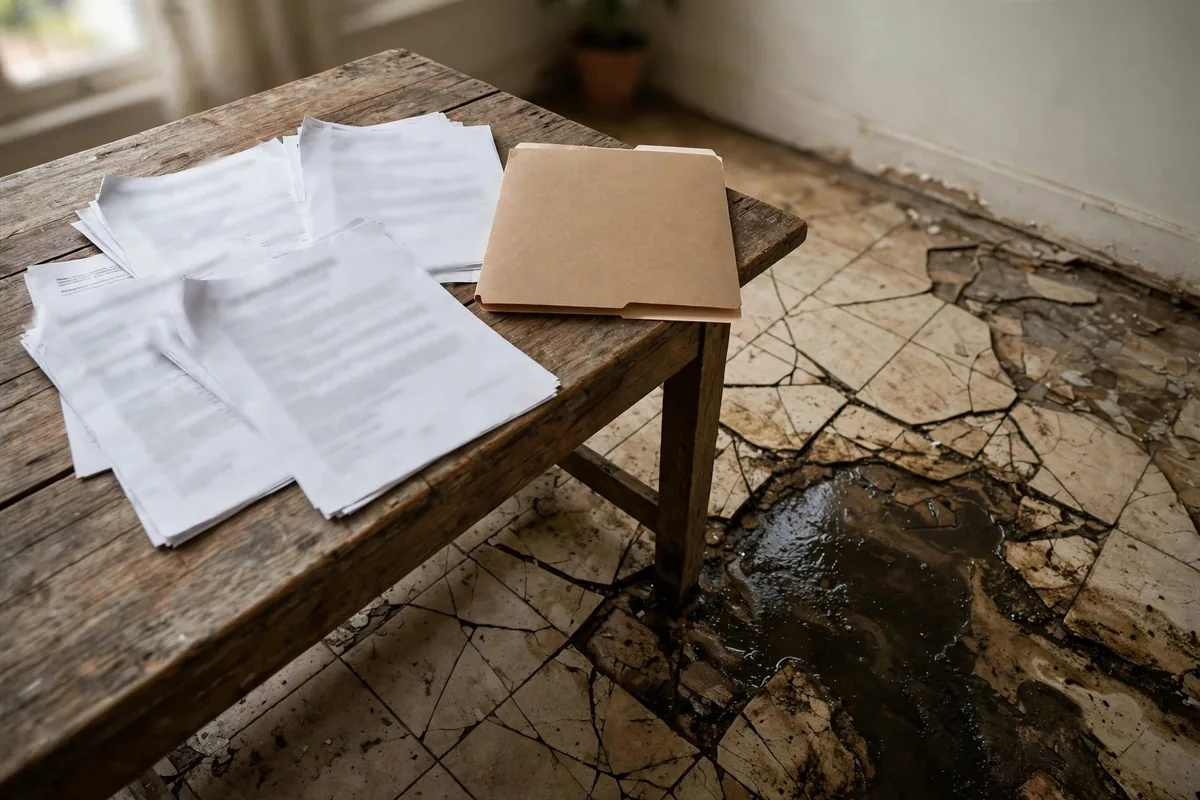
Does homeowner's insurance cover slab leaks? It is one of the most asked questions in this business, and the honest answer is that it depends on your policy, the cause of the leak, and what exactly you are claiming. Coverage for slab leaks is rarely a simple yes or no; policies typically split the event into parts and treat each part differently. This article explains the basic concepts so you can read your own policy with understanding and have a productive conversation with your agent. It is general information, not legal or insurance advice, and your policy's actual language always controls.
The Core Distinction: Sudden vs. Gradual
Most homeowner's policies are built around covering sudden and accidental events while excluding gradual deterioration. A pipe that bursts without warning is the textbook sudden event. A pinhole leak from decades of corrosion that ran undetected for months sits in murkier territory, because the corrosion itself is gradual even if the discovery was sudden. Where your leak falls on this spectrum heavily influences coverage. This is one reason prompt action matters: a leak discovered and addressed quickly looks more sudden-and-accidental than one documented as running for a year while the homeowner waited.
Access vs. Repair: The Split Most Policies Make
Many policies distinguish between the cost of getting to the leak and the cost of fixing the pipe. Tearing up concrete, removing flooring, and opening walls to reach a failed under-slab line is often treated as part of the covered water-damage event, while repairing or replacing the worn-out pipe itself may be excluded as maintenance of a deteriorated component. In practical terms, this can mean the slab opening and restoration are covered while the new pipe section is not, or vice versa depending on the policy. Read the sections on water damage, wear and tear, and any slab or foundation endorsements to see how your policy draws the line.
Resulting Water Damage Is Usually the Covered Part
What policies most consistently cover is the damage the water caused: ruined flooring, damaged drywall, swollen cabinetry, and mold remediation resulting from a covered water event. If a sudden pipe failure floods a section of your home, the resulting damage to finishes and belongings is typically the heart of the claim. Documenting that damage thoroughly, with the dated photos and professional reports described in our {documentation guide, /blog-documenting-insurance-claim/}, directly supports this portion of the claim. The pipe repair itself is often the smaller cost; the water damage restoration is frequently the larger one.
Common Exclusions to Understand
Policies commonly exclude damage from long-term seepage, faulty or defective construction, and wear and tear. A leak attributed to original installation defects in a 1960s tract home may face the faulty-workmanship exclusion. Damage that the insurer characterizes as long-term leakage rather than a sudden event may be excluded even if you only just discovered it. Flood, meaning rising groundwater or surface water, is a separate exclusion from plumbing leaks; during Rancho Palos Verdes winters, distinguishing a true slab leak from rainwater intrusion matters for coverage reasons as well as repair reasons. {Professional detection, /electronic-slab-leak-location/} that proves a pressurized pipe failure helps keep the claim in the plumbing-leak category.
Endorsements and Riders Worth Knowing About
Some policies offer endorsements that change the slab leak picture significantly. Service line coverage endorsements, where available, can cover the repair of underground service lines. Water backup endorsements address drain and sewer backups, a different peril from supply-line slab leaks but sometimes confused with them. Mold remediation sublimits cap what the policy pays for mold cleanup regardless of the underlying event. Review your declarations page for these line items, and if you own an older Rancho Palos Verdes home with original plumbing, ask your agent specifically which endorsements would respond to an under-slab supply line failure.
Deductibles and Claim Strategy
Before filing, compare the likely covered scope against your deductible. If the covered portion of the loss barely exceeds the deductible, filing may not be worthwhile, and claims history can affect future premiums. Get the detection report and a scoped repair estimate first, so you are filing with real numbers rather than guesses. When the water damage is extensive, involving flooring across multiple rooms or mold remediation, claims more clearly make sense. There is no universal right answer; it is arithmetic applied to your policy and your loss.
How to Talk to Your Agent Before Trouble Starts
The best time to understand your coverage is before you need it. Call your agent and ask directly: how does my policy treat an under-slab water line failure? Is the access work covered? Is the pipe repair covered? What are my mold sublimits? Are service line endorsements available? Get the answers in the context of your actual policy, not generalities. Then keep the policy accessible and your documentation habits ready. If a leak does occur, professional {claim documentation help, /slab-leak-insurance-claim-help/} can assist with the paperwork. And when you need the leak itself found and fixed, call (833) 713-2101 to be connected with an independent local slab leak specialist serving Rancho Palos Verdes.
Suspect a Slab Leak? Talk to a Specialist Today
One call connects you with a local slab leak professional serving Rancho Palos Verdes, CA — day or night.
Call (833) 713-2101Frequently Asked Questions
Does homeowner's insurance cover slab leaks?
It depends on the policy, the cause, and which costs you are claiming. Many policies cover resulting water damage and the cost of accessing the leak while excluding the pipe repair itself as wear and tear. Sudden failures are treated more favorably than long-term seepage. Your policy's actual language controls.
Is breaking the slab to reach the leak covered?
Many policies cover the access work, like opening the slab, as part of the water-damage event, while excluding the repair of the deteriorated pipe itself. Some policies treat it differently, so read your water damage, wear-and-tear, and foundation provisions carefully.
Is water damage from the leak covered?
Yes, typically. The damage that escaping water causes to flooring, drywall, cabinetry, and belongings is usually the core of a slab leak claim, assuming the underlying event is a covered sudden water loss. Thorough documentation of that damage directly supports this portion.
What exclusions most often affect slab leak claims?
Long-term seepage, wear and tear, faulty construction, and flood from rising groundwater are common exclusions. A leak characterized as gradual corrosion or long-term leakage may be denied even if you just discovered it, which is why prompt action and a professional detection report matter.
Are there endorsements that help with slab leaks?
Service line endorsements, where available, can cover underground line repairs; check whether your policy offers one. Also review mold remediation sublimits and water backup endorsements. Ask your agent which endorsements would respond to an under-slab supply line failure in your specific home.