First Steps to Take When You Suspect a Slab Leak in Your Home
Suspecting a slab leak is stressful. The signs are unsettling, a water line buried under concrete feels out of reach, and every hour the leak keeps running. The good news is that the first steps are simple, cost nothing, and put you in control of the situation. This guide walks Rancho Palos Verdes homeowners through exactly what to do, in order, from the moment suspicion strikes. Take a breath, work through these steps methodically, and you will have done everything right before a specialist ever arrives.
Step One: Confirm Water Is Actually Flowing
Before assuming the worst, verify that water is moving through your plumbing when it should not be. Turn off every faucet, make sure the dishwasher and washing machine are not running, and switch your irrigation controller to the off position. Then go to your water meter, usually near the curb or sidewalk, and watch the dial or digital display for about 15 minutes. If it advances while everything is off, water is flowing somewhere in your system. Many Rancho Palos Verdes meters have a small leak-indicator triangle or star that spins with even tiny flows, which makes this test straightforward. Record the start and end readings with your phone.
Step Two: Rule Out the Easy Explanations
A moving meter does not automatically mean a slab leak. Check each toilet by adding a few drops of food coloring to the tank and waiting 20 minutes without flushing; color in the bowl means a flapper is leaking. Listen at the water heater for constant burner or element activity, and check outdoor hose bibs and irrigation valves for drips. Walk the perimeter of the house looking for soggy soil or unusually green patches of lawn. Eliminating these simpler causes first saves everyone time and keeps the diagnosis honest.
Step Three: Locate Your Main Shutoff Valve
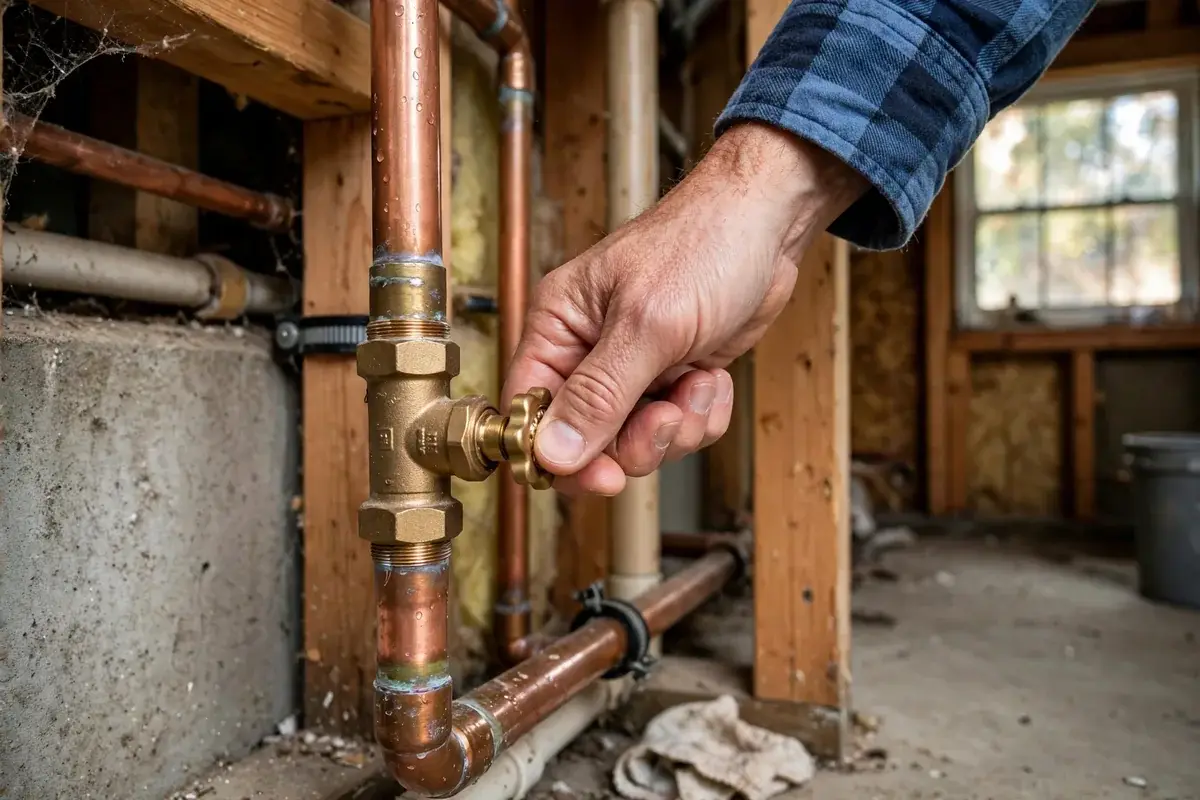
Every homeowner should know where the main water shutoff is before an emergency forces the issue. In most Rancho Palos Verdes homes it is a gate or ball valve on the main line where it enters the house, often in the garage, on an exterior wall, or in a ground-level utility box near the meter. Turn it clockwise to close it and confirm it actually moves; older gate valves sometimes seize from years of disuse. If the house valve is stuck, the meter-side shutoff at the curb is your backup. Do not shut off the water yet unless damage is actively spreading. Keeping water flowing actually helps {electronic detection equipment, /electronic-slab-leak-location/} hear the leak later, and an unnecessary shutoff disrupts the whole household.
Step Four: Document Everything With Dates
Start a simple record the day suspicion begins. Photograph damp spots, warm floor areas, cracks, and any visible water, and make sure your phone timestamps the images. Write down when you first noticed each symptom and anything that changed, such as a water bill increase or a new sound. Save the last few water bills showing the usage climb. This documentation serves two purposes: it gives the detection specialist a clear history to work from, and it becomes the foundation of an insurance claim if you file one. Homeowners who document from day one consistently have smoother claims than those who try to reconstruct events weeks later, which is why our guide to {documenting a slab leak for insurance, /slab-leak-insurance-claim-help/} starts with this same habit.
Step Five: Resist the Urge to Break Concrete
It is tempting to grab a sledgehammer and open the slab where the floor feels warm or damp, but exploratory demolition without precise location data is one of the costliest mistakes a homeowner can make. Warm spots and damp patches on the surface rarely sit directly above the actual pipe break, since water travels along the path of least resistance under the slab. Breaking concrete in the wrong place means paying to repair good slab, damaging flooring for nothing, and still having the leak. Professional {slab leak detection, /slab-leak-detection/} uses acoustic sensors and thermal imaging to pinpoint the break within inches before anyone picks up a jackhammer.
Step Six: Call and Connect With a Local Specialist
Once you have confirmed flow, ruled out simple causes, and documented the symptoms, it is time to bring in expertise. When you are ready, (833) 713-2101 connects you directly with an independent local slab leak specialist serving Rancho Palos Verdes and the nearby South Bay cities, not a call center reading from a script — a real specialist, not a call center. Describe your meter test results, the symptoms, and their timeline. The specialist will typically schedule a detection visit, explain how to prepare, and advise whether to leave the water on or shut it off in the meantime. From that point forward you have a professional plan, which is exactly where you want to be.
What Not to Do in the Meantime
Do not pour leak-sealing chemicals into your potable water lines; products marketed for radiators or pools are not safe for drinking water and can complicate proper repair. Do not ignore the problem hoping it seals itself, because pressurized supply leaks do not heal and the soil erosion beneath the slab continues silently. And do not let an unqualified handyman start opening floors without a confirmed leak location. A calm, documented, professional approach protects your home, your flooring, and your wallet far better than rushed improvisation.
Suspect a Slab Leak? Talk to a Specialist Today
One call connects you with a local slab leak professional serving Rancho Palos Verdes, CA — day or night.
Call (833) 713-2101Frequently Asked Questions
My meter is moving with everything off. Is that enough to confirm a slab leak?
No. A meter test only tells you water is flowing, not where the leak is. If the meter moves with everything off, note the reading, shut off the house main valve as a precaution, and call (833) 713-2101 to be connected with a local detection specialist. Do not break into the slab on your own.
What is the quickest way to check for a slab leak at home?
Use your senses first: check for warm floor spots, damp carpet, the sound of running water, and low pressure. Then do the meter test to confirm flow. Photograph everything with dates. This 30-minute routine gives the specialist a head start and creates a record you may need later.
Can I wait a few weeks to see if the signs go away?
Waiting rarely helps. A pressurized leak erodes soil under the slab around the clock, and moisture damages flooring and feeds mold growth the longer it sits. Early detection usually means a smaller repair area and less secondary damage, so prompt action saves trouble even if the leak turns out to be minor.
Should I shut off my water immediately?
Shut off the main valve if water is actively damaging floors or you cannot stop the flow another way. Otherwise, leave the water on until a specialist advises you, since running water helps acoustic detection equipment pinpoint the leak. The meter test and shutoff location check are the two most useful things you can do before the visit.
What information should I have ready when I call?
Write down when each symptom started, photograph visible signs with dates, save recent water bills showing the increase, and locate your main shutoff valve and water meter so you can describe their positions. If you have home insurance, pull up your policy number. This preparation makes the specialist visit and any claim far smoother.