Epoxy Pipe Lining Guide: Rehabilitating Slab Lines From the Inside
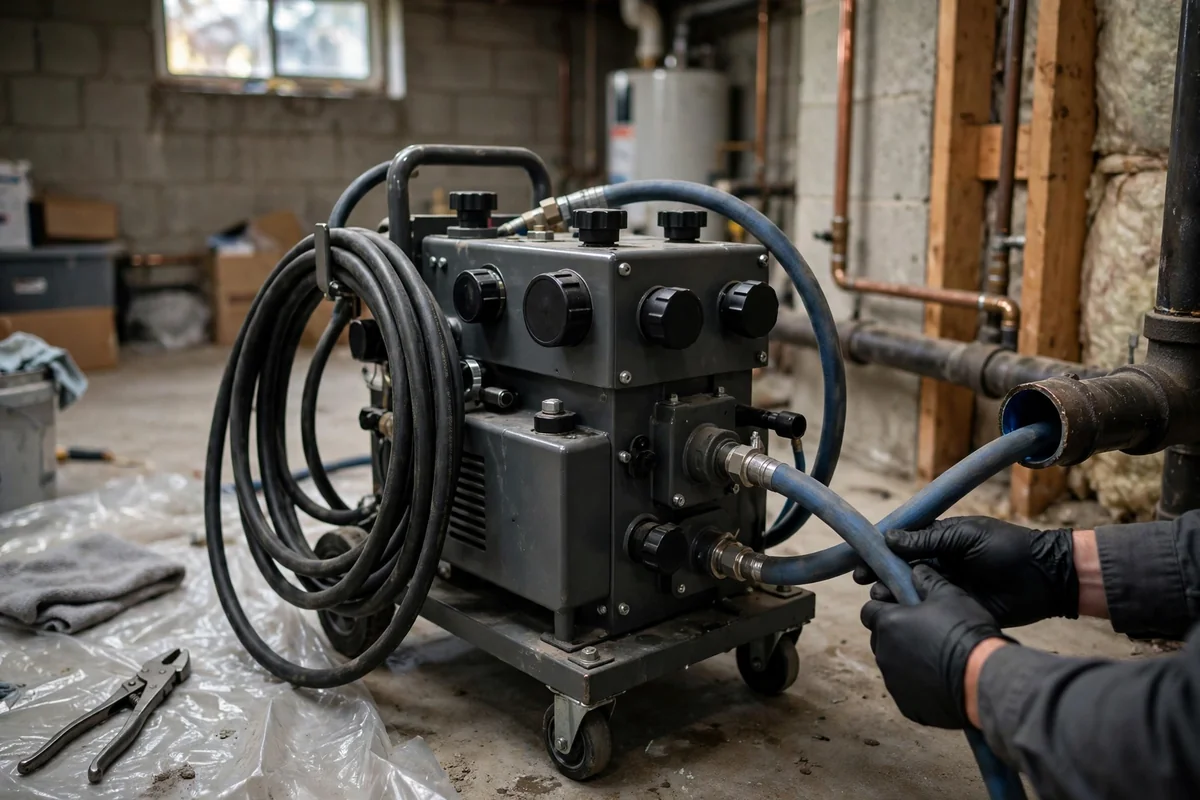
Epoxy pipe lining is one of the less understood options for dealing with aging under-slab water lines. Instead of digging up the old pipe or abandoning it, lining rehabilitates the pipe from the inside: a specialized epoxy coating is applied to the interior walls, sealing pinholes and creating a new corrosion-resistant surface within the existing line. For the right pipe in the right condition, it solves systemic corrosion without breaking the slab or rerouting through the house. This guide explains the process step by step, who it suits, and where its boundaries are.
The Core Idea: A New Pipe Inside the Old One
Think of lining as giving the existing pipe a new interior skin. The old copper or other metal pipe remains in the ground as a structural host, while the epoxy layer becomes the actual water-contact surface. Once cured, the coating seals existing pinholes, bridges small pits, and presents a smooth, jointless interior that resists the corrosion mechanisms attacking the original metal. Because the work happens through existing access points, the slab stays intact and the home's finishes are undisturbed. It is rehabilitation rather than replacement, and that distinction drives both its appeal and its limits.
Step One: Assessment and Candidacy
Not every pipe can be lined, so the process starts with evaluation. The line's material, diameter, and layout are mapped, and its interior condition is inspected, often with a small camera, to check for the scale of corrosion, the size of existing holes, and any structural problems. Lining needs a host pipe with enough structural integrity to contain the coating process; a pipe that is crushed, collapsed, or separated at joints is not a candidate. {Electronic detection, /electronic-slab-leak-location/} and pressure testing establish which lines are leaking and how the system is laid out, so the lining plan targets the right runs.
Step Two: Cleaning and Preparation
Preparation determines the outcome. The pipe interior must be cleaned down to a sound surface so the epoxy bonds properly. Technicians use controlled abrasive methods, such as grit blasting with a suitable medium or mechanical descaling, working through access points to scour the full length of the run. Debris is extracted, and the line is dried thoroughly, since moisture interferes with adhesion and curing. This is the least glamorous phase and the most critical; a lining applied over loose scale or damp corrosion will not last, and reputable installers spend real time here.
Step Three: Coating Application
With the interior prepared, the epoxy is introduced and distributed evenly along the pipe walls. Application methods vary by system, but the goal is consistent: a continuous, uniform coating of specified thickness with no thin spots, runs, or voids. Technicians monitor the application to verify coverage, and the chemistry is designed for potable water service once cured. The coating bridges pinholes and minor pitting, effectively sealing the leaks that brought the homeowner to this point, while the jointless interior eliminates the crevices where corrosion previously concentrated.
Step Four: Curing and Verification
The epoxy must cure fully before the line returns to service, and curing conditions, time, and temperature are controlled per the system specification. Rushing this step is one of the classic ways lining jobs fail. After curing, the line is pressure-tested to verify integrity and inspected to confirm uniform coverage. Only when testing passes is the line reconnected and returned to service. A proper lining project ends with documentation of the work performed, which matters for your records and any future home sale.
Where Lining Excels
Lining is at its best when a home's under-slab lines suffer from systemic interior or exterior corrosion but remain structurally intact, the classic aging-copper situation in Rancho Palos Verdes ranch homes. It addresses the whole run at once rather than chasing pinholes one by one. It preserves slabs, flooring, and landscaping completely. And it can rehabilitate lines in locations where excavation or rerouting would be exceptionally disruptive, such as under additions or beneath heavily finished spaces. For homeowners who want to keep their original routing while ending the corrosion cycle, it is a compelling option.
Where Lining Is Not the Answer
Candor matters here. Lining cannot fix a crushed or collapsed pipe, reconnect separated joints, or correct fundamentally flawed routing. It does not address exterior corrosion that has thinned the pipe wall to the point of structural weakness, since the host must hold together. It is also not a do-it-yourself project; the cleaning, application, and curing demand specialized equipment and training, and a poorly executed lining can obstruct the line or fail prematurely. Finally, lining rehabilitates the pipe but does nothing about secondary damage the leak already caused, so flooring and mold issues still need their own attention. A {lining specialist, /epoxy-pipe-lining/} should be frank about candidacy rather than selling the method for every situation.
Questions to Ask a Lining Provider
Ask how candidacy is determined and what happens if the pipe proves unsuitable mid-project. Ask about the preparation method in detail, the specified coating thickness, and the curing protocol. Ask what potable-water approvals the epoxy system carries and what documentation you receive at completion. Ask how existing leaks are verified sealed afterward, and what warranty covers. Straightforward, specific answers indicate a professional operation. A call to (833) 713-2101 puts you in touch with an independent local slab leak specialist serving Rancho Palos Verdes who can assess whether your lines are genuine lining candidates and explain the alternatives honestly if they are not for a candid assessment of lining candidacy.
Suspect a Slab Leak? Talk to a Specialist Today
One call connects you with a local slab leak professional serving Rancho Palos Verdes, CA — day or night.
Call (833) 713-2101Frequently Asked Questions
What is epoxy pipe lining?
Epoxy pipe lining rehabilitates an existing under-slab water line from the inside by applying a corrosion-resistant epoxy coating to the pipe's interior walls. The coating seals pinholes and creates a new jointless interior surface, all without breaking the slab or digging up the line.
Which pipes cannot be lined?
The host pipe must be structurally intact. Crushed, collapsed, or separated pipes cannot be lined. Heavy exterior wall loss, major obstructions, and fundamentally flawed routing also rule it out. A camera inspection and pressure testing during assessment determine candidacy before any commitment.
Is the epoxy safe for drinking water lines?
The coating is designed for potable water service and is applied and cured per system specifications, after which the line is tested before returning to service. Ask the provider specifically which potable-water approvals their epoxy system carries and what curing protocol they follow.
How long does a lining project take?
The project typically takes shape over a few days including assessment, preparation, application, and curing, with the water off during the active work phases. Timelines vary with the length and number of runs being lined. Your specialist will lay out the schedule before work begins.
How does lining compare to rerouting?
Lining preserves the original routing and rehabilitates the pipe in place with no slab or interior demolition. Rerouting abandons the old line and installs new pipe through walls or the attic. Lining suits intact-but-corroded pipes; rerouting suits lines that should leave the soil environment entirely.