Emergency Water Shutoff Guide: Stop the Flow in Minutes
In a plumbing emergency, the single most valuable skill a homeowner can have is knowing how to shut off the water quickly. Whether it is a slab leak that has finally surfaced, a burst supply line, or a failed water heater, stopping the flow limits damage more than anything else you can do in the first minutes. Yet many homeowners have never touched their main shutoff valve and would waste precious time searching for it under stress. This guide ensures that never happens to you: where to find every shutoff, how each type works, and exactly what to do when water is going where it should not.
Finding Your Main Shutoff Valve
The main shutoff controls all water entering your home and is your first and most important valve to know. In most Rancho Palos Verdes homes, look in these places in order: on the main line where it enters the house, often in the garage on the wall facing the street; on an exterior wall near the hose bib; inside a ground-level utility box in the yard or near the sidewalk; or in a crawl space or utility closet for homes with those features. The valve sits on the largest-diameter pipe entering the building, usually three-quarter inch or one inch. If you have never located yours, do it this weekend, not during an emergency. Walk every adult in the household to it and make sure they can find it in the dark.
Gate Valves vs. Ball Valves
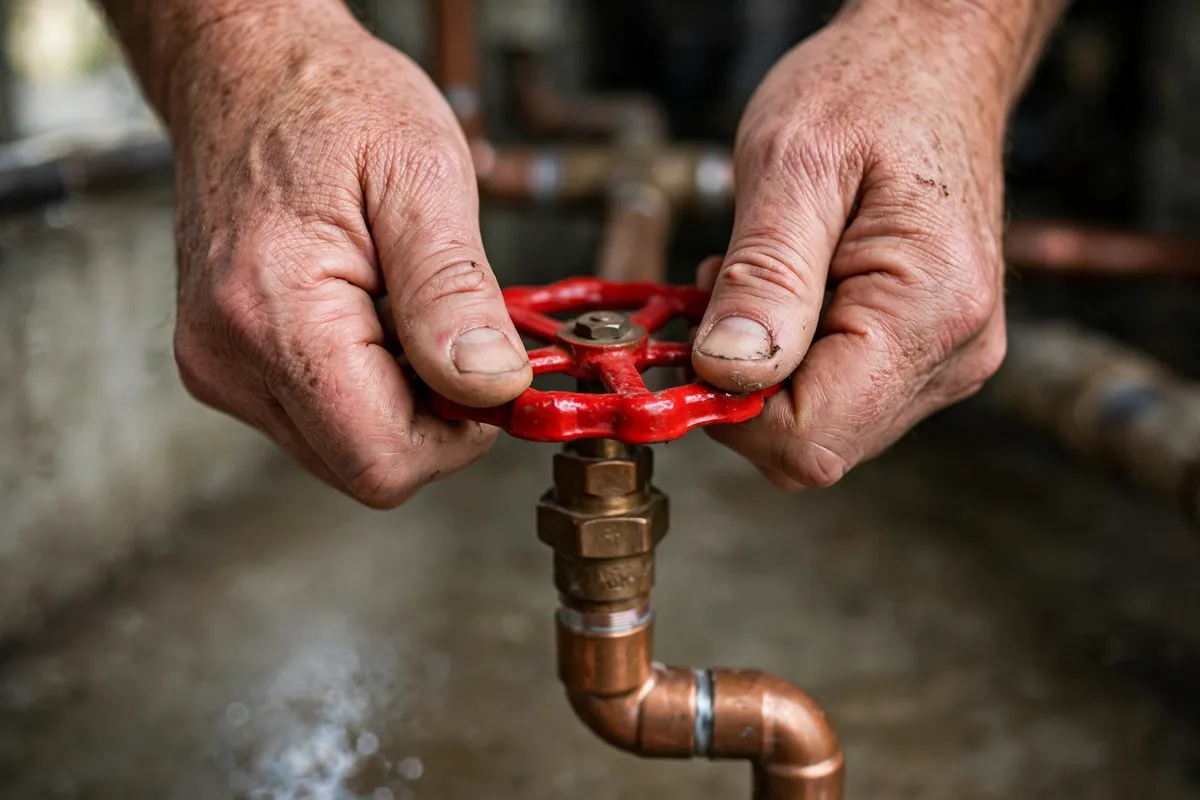
You will encounter one of two designs. A gate valve has a round, wheel-like handle and closes by turning clockwise multiple rotations; these are common in older homes and are prone to seizing after years of disuse. A ball valve has a straight lever handle and closes with a quarter turn so the handle sits perpendicular to the pipe; these are more reliable and standard in newer installations. Test your valve now: turn it off, confirm water stops at a faucet, then turn it back on. If a gate valve will not budge, do not force it with a wrench hard enough to break the stem; note its condition and plan for a plumber to service or replace it. A shutoff you cannot operate is not a shutoff.
The Meter-Side Shutoff: Your Backup
If the house valve fails or you cannot find it, the water meter at the property line has its own shutoff. The meter usually sits in a ground box near the curb or sidewalk, sometimes shared with a neighbor's in a larger vault. Inside you will find the meter and a valve on the street side, which typically requires a meter key or a crescent wrench to operate. This valve belongs to the water utility's side of the system in many jurisdictions, but in an emergency, shutting it off to stop active flooding is standard practice; you can sort out protocol with the utility afterward. Locate your meter box now and confirm you can open it and identify the valve.
Fixture and Appliance Shutoffs
Not every emergency requires killing water to the whole house. Individual fixtures have their own shutoffs: the small oval or lever valves under sinks and behind toilets, the valves on the supply lines to the washing machine, and the cold-water inlet valve on the water heater. A failed toilet supply line or a burst washing machine hose can be stopped at the fixture valve in seconds, leaving the rest of the house functional. Make sure these valves operate too; the cheap multi-turn stops under sinks seize just as readily as main gate valves. During any plumbing work is a good time to exercise every valve in the house.
Step by Step: Shutting Off in an Emergency
When water is actively escaping, work this sequence. First, if the source is a single fixture or appliance and you can reach its shutoff safely, close that valve; it is the fastest stop with the least disruption. Second, if the source is unclear, inaccessible, or clearly a major line, go straight to the main house shutoff and close it fully. Third, if the house valve fails, go to the meter and shut off there. Fourth, once the flow stops, open a low faucet, such as a hose bib or tub spout, to drain residual pressure from the lines. Fifth, turn off the water heater or set it to pilot or vacation mode so it does not heat an emptying tank. Then assess, document with photos, and call for help.
After the Water Is Off
With the flow stopped, your priorities shift to limiting damage and starting recovery. Move valuables and electronics away from wet areas, and begin removing standing water with towels, a wet vacuum, or mops. Do not restore water until the failure is understood; turning it back on to test a suspected {slab leak, /slab-leak-detection/} just resumes the damage. If the emergency involves a suspected under-slab leak, keep the water off and schedule {electronic detection, /electronic-slab-leak-location/} rather than experimenting. Document everything with dated photos for your records and any insurance claim. Then call (833) 713-2101 to be connected with an independent local slab leak specialist serving Rancho Palos Verdes who can take it from there.
Making Shutoff Knowledge Permanent
Knowledge fades unless it is maintained. Label the main shutoff with a tag or paint mark so it is obvious even to a houseguest or a housesitter. Exercise every valve in the house once a year, closing and reopening each one to prevent seizure. After any plumbing work, confirm the workers left all valves operational and in their normal positions. Include the shutoff location in your household emergency plan alongside the electrical panel and gas shutoff. Ten minutes of preparation, refreshed annually, is the cheapest insurance your plumbing can have.
Suspect a Slab Leak? Talk to a Specialist Today
One call connects you with a local slab leak professional serving Rancho Palos Verdes, CA — day or night.
Call (833) 713-2101Frequently Asked Questions
Where is my main water shutoff valve?
Check the garage wall facing the street where the main line enters, exterior walls near hose bibs, ground-level utility boxes in the yard, or utility closets. It sits on the largest pipe entering the house. If you have never found yours, locate it this weekend and walk every adult in the household to it.
What is the difference between gate and ball valves?
A gate valve has a round wheel handle needing multiple clockwise turns; a ball valve has a lever needing only a quarter turn. Ball valves are more reliable. Test yours now, and if an old gate valve will not move, do not force it with excessive leverage; have a plumber service or replace it.
What are the exact steps in a water emergency?
Close the fixture's own shutoff first if you can reach it safely, such as the valves under a sink or behind a toilet. If the source is unclear or a major line, close the main house shutoff. If that fails, shut off at the water meter. Then drain residual pressure and set the water heater to pilot or vacation mode.
Can I shut off water at the meter?
Yes, in an emergency. The meter box near the curb contains a street-side valve operable with a meter key or wrench. Stopping active flooding takes priority; any protocol questions with the utility can be sorted afterward. Locate your meter box and confirm you can open it before you need it.
How do I make sure valves work when I need them?
Tag or paint-mark the main shutoff so it is obvious, exercise every valve in the house annually by closing and reopening, confirm valves are operational after any plumbing work, and include the shutoff location in your household emergency plan with the electrical panel and gas shutoff.