Documenting a Slab Leak for Your Insurance Claim: A Complete Guide
If you carry homeowner's insurance, a slab leak may entitle you to coverage for some of the resulting costs, but the difference between a smooth claim and a denied one usually comes down to documentation. Adjusters decide based on evidence, timelines, and policy language, and the homeowner who documented from day one is in a far stronger position than the one reconstructing events from memory. This guide walks through exactly what to record, how to organize it, and when to involve your insurer, so your claim file tells a clear, credible story.
Start the File the Day You Suspect a Leak
Do not wait for confirmation to begin documenting. Create a simple folder, physical or digital, and start adding to it immediately. Write down the date you first noticed each symptom: the water bill increase, the warm floor spot, the damp carpet, the sound of running water. Note what you did in response and when. This contemporaneous record carries weight because it was created before anyone knew there would be a claim. Adjusters see many claims; the ones with dated, sequential documentation stand out as credible.
Photograph and Video Everything Visible
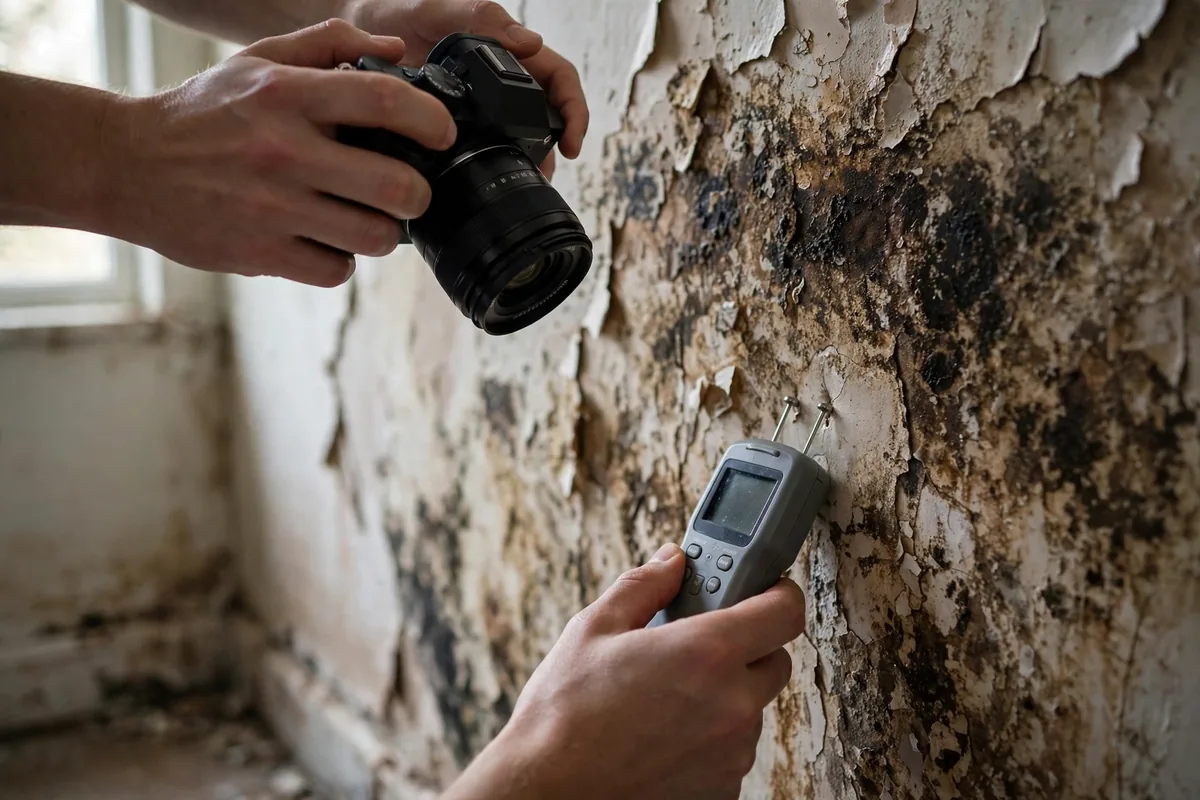
Photograph every symptom: damp spots on flooring, discolored baseboards, cracks, mineral deposits, and any visible water. Take wide shots showing the location within the room and close-ups showing detail, and make sure your phone's timestamps are enabled. Video is valuable too; a short clip panning across a damp area or capturing the sound of running water with fixtures off communicates what still photos cannot. Re-photograph the same spots periodically to show progression, since a worsening condition over time supports the claim narrative. Store originals, not just compressed social-media copies.
Save Water Bills and Meter Readings
Your water bills are objective evidence of the leak's existence and duration. Save the bills showing normal usage before the leak alongside the bills showing the increase, highlighting the billing periods. If you performed a meter test, record the start and end readings with dates and photos of the meter. Some homeowners also log daily or weekly meter readings during the investigation period, which creates a compelling usage timeline. This data answers the adjuster's first question, which is always whether a leak actually occurred and for how long.
Keep Every Professional Report
The {electronic detection report, /electronic-slab-leak-location/} is the technical centerpiece of your file. It identifies the leaking line, the precise location, and the diagnostic methods used, which establishes that a real plumbing failure occurred rather than, say, groundwater intrusion. Keep the repair proposal and final invoice with line items, any mold assessment or remediation reports, flooring contractor estimates, and receipts for emergency measures like water extraction or dehumidifier rental. If a specialist notes the probable cause, such as corrosion or a failed fitting, keep that in writing too, since cause-of-loss language matters to adjusters.
Log All Communication
From the first call to your insurer onward, log every interaction: the date, the representative's name, what was discussed, and any reference or claim numbers. Follow up important phone conversations with a brief email summarizing what was agreed. Keep copies of every letter, email, and form in both directions. If an adjuster visits, note the date and what was inspected, and ask for a copy of their report. Organized communication records prevent the all-too-common situation where the homeowner and insurer remember a conversation differently.
Understand What Your Policy Likely Addresses
While every policy differs, most homeowner's policies draw similar lines, and knowing them shapes your documentation. Coverage often distinguishes between the cost of accessing the leak, such as breaking the slab, and the cost of repairing the pipe itself. Sudden and accidental water damage is typically treated differently from long-term seepage or wear and tear. Document the suddenness of discovery and the promptness of your response, since those facts support the sudden-and-accidental framing. Our overview of {insurance coverage basics for slab leaks, /blog-insurance-cover-slab-leaks/} explains these distinctions in more depth. This is general information, not advice about your specific policy; read your own declarations and exclusions carefully.
When to File and What to Expect
File promptly once the leak is confirmed and you understand the scope; most policies require timely notice, and delay can complicate a claim. When you call your insurer, have your policy number, the detection report, and your symptom timeline ready. An adjuster will typically inspect, review your documentation, and determine coverage under your policy terms. Be factual and consistent, provide what is asked for without volunteering speculation, and keep copies of everything you submit. If any part of the claim is denied, ask for the denial in writing with the specific policy language cited, so you understand exactly what was decided and why.
Getting Professional Help With the Paperwork
The documentation burden is real, and some homeowners find it worth getting help. A {slab leak insurance claim specialist, /slab-leak-insurance-claim-help/} can assist with organizing the technical documentation, framing the cause-of-loss narrative, and communicating with the adjuster. For help making sure your paperwork supports the claim, (833) 713-2101 connects you with an independent local slab leak specialist serving Rancho Palos Verdes who understands what adjusters look for and can make sure your detection report and repair documentation support your claim properly from the start.
Suspect a Slab Leak? Talk to a Specialist Today
One call connects you with a local slab leak professional serving Rancho Palos Verdes, CA — day or night.
Call (833) 713-2101Frequently Asked Questions
When should I start documenting for an insurance claim?
Start immediately, the day you first suspect a leak. Record dates for each symptom, photograph everything visible, save water bills showing the usage increase, and log your meter test. Contemporaneous records created before any claim existed carry the most credibility with adjusters.
What documents does a slab leak claim need?
Dated photos and videos of all symptoms, water bills showing normal versus elevated usage, meter test readings, the professional detection report, repair proposals and invoices, mold or flooring contractor reports, receipts for emergency measures, and a log of all insurer communications.
Should I keep records of calls with my insurer?
Yes. Keep a log with dates, representative names, discussion summaries, and claim or reference numbers, and follow up key phone calls with confirming emails. Organized communication records prevent disputes about what was said or agreed.
How soon after discovery should I file the claim?
File promptly after the leak is confirmed and the scope is understood. Most policies require timely notice, and delays can complicate coverage. Have your policy number, detection report, and symptom timeline ready when you call.
What if my claim is denied?
Ask for the denial in writing with the specific policy language cited. Understanding exactly which provision was applied tells you whether the decision reflects your policy terms or a misunderstanding of the facts, and it preserves your options for follow-up.