Slab Leak Repair in Palos Verdes Estates, CA 90274
In Short
Palos Verdes Estates, CA 90274 mixes 1920s Spanish Revival homes with postwar tracts, so a slab leak call here can mean century-old galvanized pipe or aging copper. If your water bill is climbing or floors feel warm, the first step is simple: call (833) 713-2101 and get connected with an independent specialist who knows vintage Peninsula plumbing.
Slab Leak Repair in Palos Verdes Estates, CA 90274: A Century of Plumbing
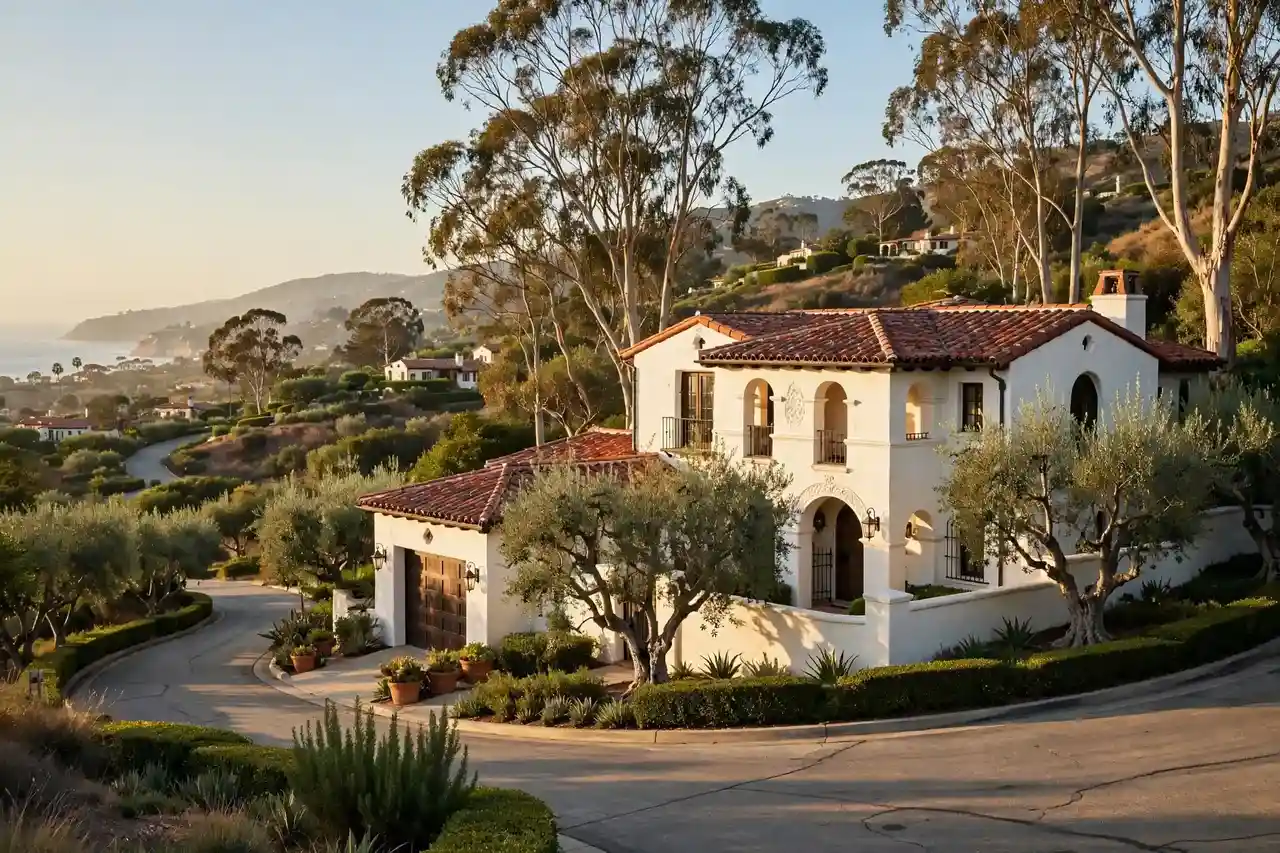
Palos Verdes Estates was master-planned in 1923 to an Olmsted Jr. and Cheney design, and its housing stock reads like a timeline. Malaga Cove holds Spanish and Mediterranean Revival homes from the 1920s and 1930s, many still carrying original or partially updated plumbing. The Lunada Bay, Montemalaga, and Valmonte tracts filled in through the 1940s, 1950s, and 1960s with the postwar homes that dominate the 90274 ZIP today. That century-long spread is the defining fact of slab leak work here: the era of the house decides everything about the diagnosis.
The 1920s to 1940s stock typically carries galvanized steel supply lines and cast-iron drains, and wherever that pipe survives untouched it is now 90 to 100 years old, past any reasonable end of life. Homes from the 1950s and 1960s run copper beneath the slab, now 60 to 70 years into service and squarely in the pinhole-leak window. Many older homes were re-piped at some point onto or under slabs, so a 1930s house can carry 1970s copper with its own aging story. Foundation types split along the same era line: pre-war homes often sit on raised foundations, while postwar tract homes are slab-on-grade.
Because the repair paths diverge completely, detection in Palos Verdes Estates starts with establishing pipe material and foundation type before anything else. A raised-foundation leak is accessed from the crawlspace; a slab leak needs pinpoint location before concrete is touched. If you are seeing signs in a 90274 home, Call (833) 713-2101 and have the build year ready. You will be connected with an independent local specialist who works these neighborhoods and asks the right first questions.
Bluff Lots, Terraced Drainage, and Coastal Moisture in 90274
The ground beneath Palos Verdes Estates is Monterey shale bedrock with coastal-bluff terrace soils. The steep bluff lots in Malaga Cove and Lunada Bay step down toward the water on terraced grades, and drainage on those terraces has to be managed lot by lot. Coastal bluffs are subject to erosion at the bluff edge, and winter rain, falling almost entirely from November through March, moves across these slopes in concentrated sheets.
The marine layer defines the summers: cool, foggy mornings that keep bluff soils damp for much of the year. That persistent dampness matters for diagnosis, because bluff-edge moisture can mimic slab leak symptoms. A damp patch at the base of a downhill wall, a musty smell in a lower room, or efflorescence on foundation concrete can all come from exterior moisture working its way in rather than from a pressurized pipe failing underneath. Fog drip and saturated terrace soil do not spin a water meter, though, which is why the meter test remains the dividing line between a plumbing problem and a drainage problem.
Steep bluff-side lots also make excavation access genuinely hard. Terracing, retaining walls, and limited staging room mean that digging to reach a pipe costs more here than on flat ground, which raises the value of detection precision. When the leak location is marked within inches, the repair opening stays small and the terrace stays intact. Ask a Pro at (833) 713-2101 how detection accuracy translates directly into lower repair footprints on bluff lots.
Malaga Cove to Lunada Bay: Getting Around 90274
The 90274 ZIP covers Palos Verdes Estates' landmark neighborhoods along Palos Verdes Drive West and Palos Verdes Drive North, with Via Chico threading through the Malaga Cove area. Malaga Cove Plaza, built between 1924 and 1964 and listed on the National Register, anchors the city's historic commercial heart, with the Neptune Fountain and Malaga Cove Library nearby. The Palos Verdes Beach and Athletic Club, the Palos Verdes Golf Club, and Lunada Bay's coastline complete the local map that service technicians navigate daily.
Most addresses fall within the Palos Verdes Peninsula Unified School District. The neighborhoods each carry their own plumbing personality: Malaga Cove's 1920s and 1930s Revival homes with their vintage galvanized and cast iron; Lunada Bay's mid-century tracts with copper under slab; Montemalaga and Valmonte's 1940s to 1960s mix where a single street can hold both raised foundations and slab-on-grade. A specialist who works 90274 knows these patterns block by block.
Historic character adds a practical wrinkle. In the oldest neighborhoods, homeowners understandably want repairs that respect original tile, plaster, and flooring, which makes rerouting through walls or tunneling beneath the slab more attractive than breaking historic floors. When you Book Service at (833) 713-2101, mention the home's era and any original finishes you want protected, so the repair plan is built around preservation from the start.
How Slab Leak Detection Works in Palos Verdes Estates Homes
Detection in 90274 begins where it always does, with the water meter. All fixtures off, watch the dial: movement means water is leaving the system. Then the house main is shut to separate a service-line leak from an under-house leak, and the water heater valves split hot-side losses from cold-side losses. On a 1920s Malaga Cove home, the technician is also checking whether the house even has a slab to leak under, since raised foundations are common in the pre-war stock and change the entire approach.
Acoustic ground microphones listen through the slab for the hiss of escaping water, thermal cameras trace warm trails from hot-line breaks, and pressure testing confirms which branch is losing pressure. On bluff lots, the findings are cross-checked against exterior moisture, because a damp downhill room with a still meter is a drainage issue, not a plumbing emergency. The deliverable is a marked location and a written findings report, produced without breaking any concrete during the diagnostic visit.
For vintage homes, one more check matters: pipe material identification. Galvanized steel, copper, and cast iron each fail differently and each points to a different repair strategy. A 1935 galvanized system with multiple pinholes is usually a repipe candidate rather than a spot-repair candidate, and an honest detection visit says so plainly. Slab leak detection in Palos Verdes Estates is as much about understanding the house as finding the leak.
Repair Paths for 90274: From Spot Repairs to Full Repipes
The right repair in Palos Verdes Estates depends on what the detection visit found, and the range is wider here than in most ZIPs. A single pinhole in 1960s copper under a postwar slab is a classic spot-repair or reroute case: open a small section, replace the failed segment, or abandon that run and route a new line overhead. Trenchless rehabilitation and epoxy lining can renew a line with minimal excavation, which matters on terraced lots where digging is expensive.
Vintage galvanized systems tell a different story. When 90-year-old galvanized pipe starts failing, it rarely fails in just one place; interior corrosion narrows the pipe throughout, and fixing one pinhole often just moves the next failure down the line. For these homes, a full or partial repipe, running new supply lines through walls and attics and abandoning the old galvanized entirely, is usually the honest recommendation. It costs more up front and fails far less often afterward.
Raised-foundation homes get the simplest version of all: the failed section is accessed from the crawlspace, cut out, and replaced without touching concrete. Whatever your home's era and foundation, the repair conversation should start from the written findings report, not from a guess. Contact Us Now at (833) 713-2101 to get connected with a specialist who will lay out the options against your home's actual conditions.
Warning Signs PVE Homeowners Should Not Ignore
Watch for the standard slab leak indicators with a vintage-home eye. A water bill climbing over two or more cycles with no usage change is the most reliable early signal. Running or hissing water sounds with everything off, warm spots on floors, damp carpet, a water heater cycling constantly, and dropping fixture pressure all deserve attention. In 1920s and 1930s homes, add one more: discolored water or reduced flow at individual fixtures, which signals interior galvanized corrosion even before a leak breaks through.
On bluff lots, separate plumbing symptoms from moisture symptoms. Dampness that tracks with rain and fog, mustiness in a downhill room, or white mineral staining on foundation walls points toward exterior moisture and drainage. Dampness that persists through dry spells, a meter that moves with everything off, or a warm floor patch points toward the pipes. Both problems are real and both need fixing, but they are fixed by different trades, so the distinction saves money.
Winter rain from November through March is when bluff moisture is loudest and when aging pipe is under the most stress, so signs noticed in those months deserve prompt attention rather than a wait-and-see approach. If you are unsure which problem you have, that uncertainty is exactly what a detection visit resolves. Get Help Now at (833) 713-2101 and describe what you are seeing.
Your First Step: Call and Get Connected
When you call (833) 713-2101, you reach a referral service that connects you with an independent local slab leak specialist serving Palos Verdes Estates and the Peninsula. Have three facts ready: the home's approximate build year, whether you know the foundation type, and what symptoms you have noticed and for how long. Those three facts let the specialist arrive with the right expectations and the right equipment.
The visit itself follows a clear sequence. First, the meter and isolation tests establish whether water is actually leaving the system and from which side. Second, acoustic and thermal equipment pinpoints the location, cross-checked against exterior moisture on bluff lots. Third, you get a marked location, a written findings report, and repair options matched to your pipe material and foundation type, from spot repair to reroute to full repipe for vintage galvanized.
If water is actively damaging floors or finishes, say so on the call and the visit is prioritized through emergency slab leak repair. Otherwise, a calm, documented approach protects both the home and the wallet. Talk to a Specialist at (833) 713-2101 and get a diagnosis built around your home's era, not a one-size template.
What Affects the Cost of Slab Leak Work in Palos Verdes Estates, 90274
Slab leak costs in Palos Verdes Estates follow the same five variables as anywhere, diagnosis complexity, repair method, lot access, finishes, and secondary damage, but the city's century-wide era mix means the numbers swing wider here than in a uniform tract ZIP. A 1960s copper spot repair and a 1920s galvanized repipe are different projects with different economics, and the first step of any honest quote is knowing which one your house needs.
Diagnosis on a vintage home takes more judgment. Establishing pipe material, foundation type, and repipe history before locating the leak adds investigation time, and on bluff lots the findings get cross-checked against exterior moisture so drainage problems are not misdiagnosed as plumbing. That diligence costs less than the alternative: authorizing slab work for a drainage problem, or spot-repairing a galvanized system that needed repiping.
The repair method decision is where the era split shows. A single pinhole in 1960s copper is a contained job: small opening, short repair, modest restoration. A 1920s to 1940s galvanized system at end of life is a repipe project, new lines through walls and attics, old pipe abandoned, which costs more upfront and ends the cycle of repeat failures. Raised-foundation bungalows get the cheapest version of all, with crawlspace access avoiding concrete work entirely. The detection report's condition read is what separates these paths, so insist on it before discussing numbers.
Bluff-lot access adds a real premium. Terraced grades, retaining walls, limited staging, and hand-carry equipment all add labor hours compared with flat-ground digging. Historic finishes add restoration cost: original 1920s tile, plaster, and hardwood demand careful protection and skilled restoration, which is priced differently than replacing builder-grade materials. Discuss finish protection before authorizing work, and get the access plan in writing.
Secondary damage is the variable you control most. Pressurized leaks erode soil and feed mold around the clock, so every month of waiting adds restoration scope. Early detection, documented symptoms, and a written findings report are the cheapest investments in the whole process. Call (833) 713-2101 and get connected with a specialist who quotes your home's era and lot, not a one-size estimate.
Suspect a Slab Leak? Talk to a Specialist Today
One call connects you with a local slab leak professional serving Rancho Palos Verdes, CA — day or night.
Call (833) 713-2101